
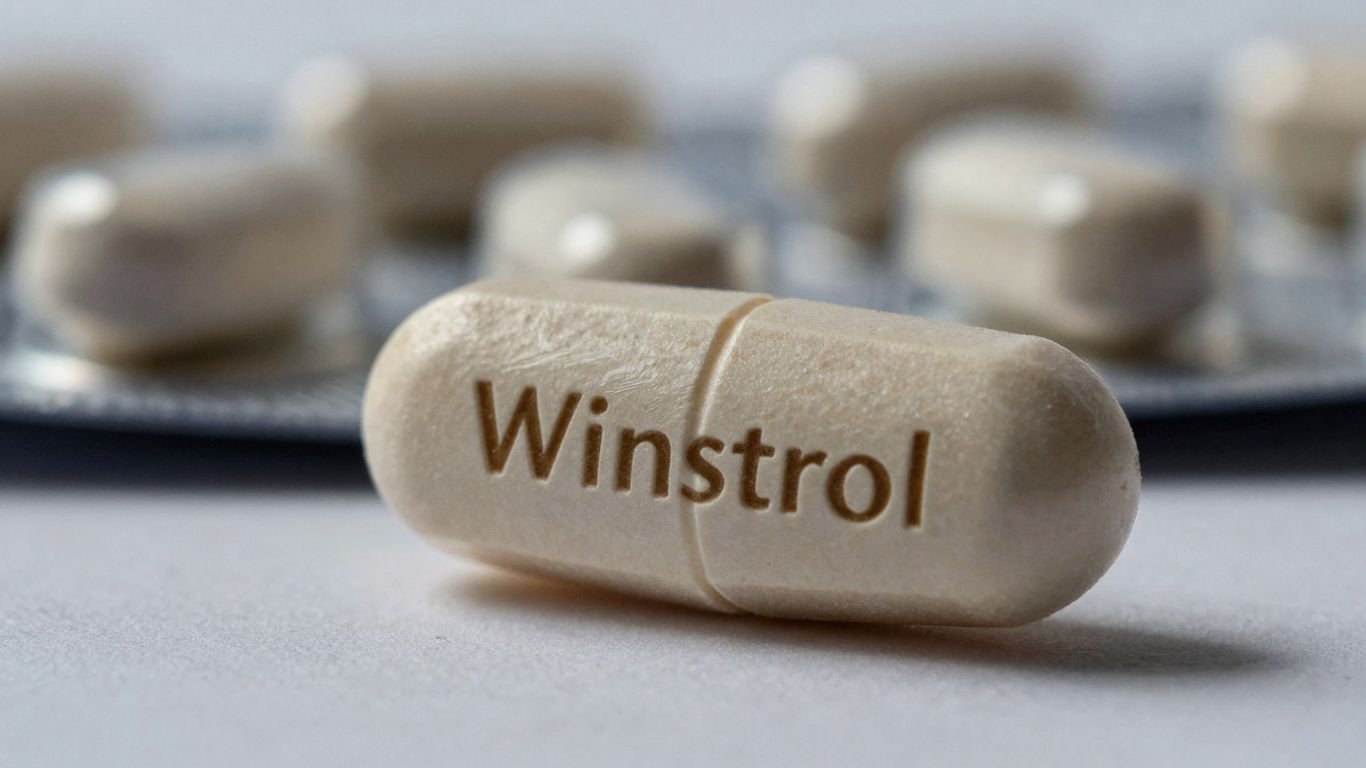
Winstrol, also known by its generic name Stanozolol, is a synthetic steroid that has been around since the 1960s. Originally developed for medical purposes, it’s also known for its use in athletic circles. This profile will look into what Winstrol is, how it works, its history, and the various aspects surrounding its use, including potential benefits, side effects, and its legal standing.
Key Takeaways
-
Stanozolol is a synthetic anabolic-androgenic steroid derived from dihydrotestosterone.
-
It was first introduced in 1962 and has seen changes in its marketing and labeling over the years.
-
While it has some approved medical uses, like treating hereditary angioedema, its use for these conditions is less common now.
-
It is known for its use in sports and bodybuilding for performance enhancement, but it is banned by major sports organizations like WADA.
-
Reported benefits include increased muscle mass and strength, though these are often anecdotally reported in non-medical contexts.
-
Potential side effects are common with anabolic steroids and can range from common reactions to serious long-term health risks.
-
It can be administered orally or via injection, with different pharmacokinetic profiles for each.
-
Its legal status varies, but it is generally a controlled substance in many countries, including the US, where it’s a Schedule III controlled substance.
What is Winstrol (Stanozolol)?
A Brief History
Stanozolol was first developed back in 1962 by Sterling-Winthrop, a pharmaceutical company. This compound is a derivative of dihydrotestosterone (DHT). Initially, it was created for medical purposes, aiming to treat conditions like anemia and hereditary angioedema. However, its journey didn’t stop there. Over the years, stanozolol found its way into different circles, leading to changes in how it’s marketed and regulated. It’s important to note that while it had approved uses, many of these are now rare due to better alternatives. The drug is classified as a Schedule III Controlled Substance in the US.
|
Category |
Details |
|---|---|
|
Chemical Name |
Stanozolol |
|
Type |
Synthetic anabolic steroid |
|
Origin |
Developed in 1962 by Sterling-Winthrop |
|
Chemical Basis |
DHT (dihydrotestosterone) derivative |
|
Medical Uses (original) |
Anemia, hereditary angioedema |
|
Additional Research Areas |
Venous insufficiency, osteoporosis, muscle injury |
|
Current Medical Use |
Rare due to better alternatives |
|
Legal Status (US) |
Schedule III Controlled Substance |
Stanozolol can be taken in two ways: orally or as an intramuscular injection. The oral form is known for its high bioavailability, meaning a good amount gets into your system. This is partly due to a modification that helps it survive the first pass through the liver. It’s not an esterified steroid, so it’s often sold as a liquid suspension or in tablet form.
|
Form |
Notes |
|---|---|
|
Oral Tablets |
High bioavailability; modified for first-pass liver survival |
|
Injectable Suspension |
Intramuscular; non-esterified steroid |
Stanozolol has a history of medical application but is now more widely recognized for its use in performance enhancement, which carries significant risks and legal implications.
It’s worth mentioning that stanozolol has also been explored for other conditions, like venous insufficiency, due to its potential to stimulate blood fibrinolysis. Some studies even looked into its use for osteoporosis and muscle injury. However, its use in sports has been a major point of discussion. It was banned by major athletic organizations quite early on, and its presence has led to some high-profile disqualifications. The World Anti-Doping Agency (WADA) lists it as a prohibited substance at all times. Detecting it is also quite straightforward with modern testing methods.
|
Topic |
Details |
|---|---|
|
Performance Use |
Commonly associated with athletic enhancement (illegal & risky) |
|
Sports Ban |
Prohibited at all times by WADA |
|
Detection |
Easily detectable with modern testing methods |
How Does Stanozolol Work?
Mechanism of Action (Scientific Breakdown)
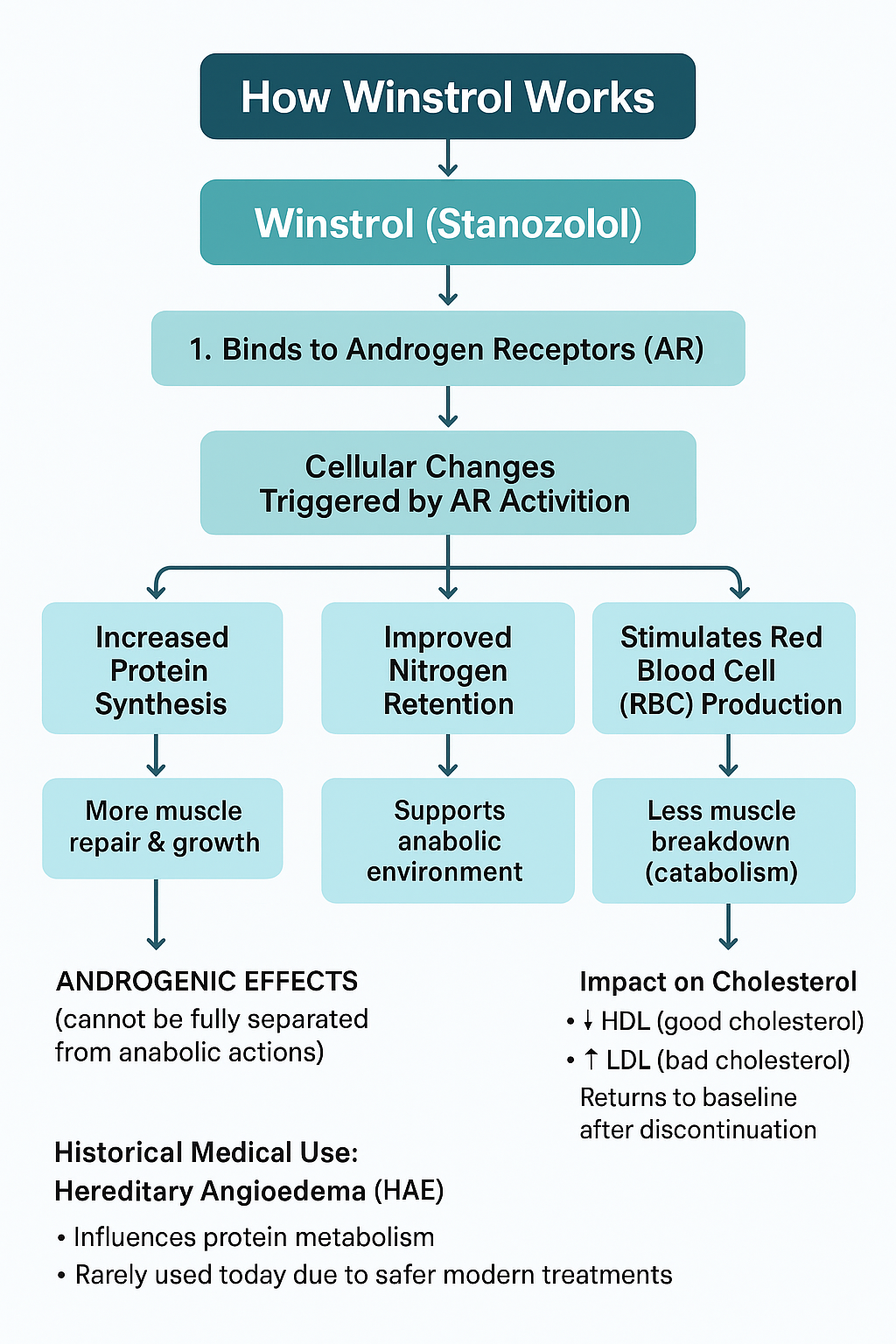
Stanozolol works mainly by interacting with androgen receptors, which triggers a series of cellular changes that support muscle maintenance and performance.
Key Actions:
-
↑ Protein Synthesis
Helps the body build and repair muscle tissue more efficiently. -
↑ Nitrogen Retention
Supports an anabolic environment where muscles can grow and recover. -
↑ Red Blood Cell Production (Mild Effect)
May improve oxygen delivery to muscles, contributing to better endurance. -
↓ Cortisol Activity
Can reduce the impact of catabolic (muscle-breaking) hormones, helping preserve lean mass.
Other Important Considerations:
-
Androgenic Effects Still Present
Even though Winstrol is considered “milder,” it still has androgenic properties—these cannot be fully separated from its anabolic effects. -
Impact on Cholesterol
Tends to lower HDL (good) cholesterol and raise LDL (bad) cholesterol, which increases cardiovascular risk.
Levels usually return to normal after discontinuation.
Approved Medical Uses
Winstrol (stanozolol) once had a broader medical role, but its approved uses have steadily narrowed as safer and more effective treatments became available.
Early Medical Applications
Historically, stanozolol was evaluated by the FDA and considered “probably effective” for two main conditions:
-
Senile and postmenopausal osteoporosis
Used alongside other therapies to help manage age-related bone loss. -
Pituitary dwarfism
Used as an adjunct therapy before human growth hormone became widely accessible.
For other proposed uses—such as reversing tissue wasting, improving nutritional status, or aiding recovery in debilitated patients—the FDA found insufficient evidence, and manufacturers were required to stop marketing those claims unless stronger data was provided.
Use in Hereditary Angioedema (HAE)
Stanozolol was also used to help reduce the frequency and severity of HAE attacks, a disorder that causes episodes of swelling.
However, since 2009, several modern, targeted HAE treatments have replaced it, making stanozolol largely obsolete for this condition.
Current Human Medical Status
Due to limited clinical value and better alternatives:
-
Stanozolol was withdrawn from the U.S. pharmaceutical market in 2010.
-
It is no longer produced by major pharmaceutical companies.
-
Access today is mostly limited to compounding pharmacies, and its use is rare and tightly regulated.
Veterinary Applications
Stanozolol has also been used in animals for:
-
Managing wasting diseases
-
Stimulating appetite and weight gain
-
Supporting red blood cell production
However:
-
The scientific support for these uses is weak.
-
Its use in racehorses falls into performance enhancement, not standard veterinary care.
-
Dogs with enlarged prostates should not receive it due to tumor risk.
-
Cats are especially vulnerable to liver toxicity.
Primary veterinary distribution today occurs through companies such as Zoetis, following industry transfers from Pfizer.
Winstrol in Sports & Performance

Winstrol has long been used in athletic circles for its reputation as a compound that enhances strength and muscle definition without causing excess water retention. This “drying” effect makes it especially popular in sports or phases where a lean, sharp appearance is desired, such as bodybuilding, weight-class sports, and physique-based competitions.
Perceived Performance Benefits
-
Increased Strength
Many users report noticeable improvements in power output and overall training intensity. -
Lean, Defined Muscle Gain
Winstrol is often associated with adding muscle that looks harder and more sculpted, rather than bulky or bloated. -
Reduced Water Retention
Its ability to create a dry look is one of the main reasons athletes prefer it over other anabolic compounds. -
Improved Recovery (Anecdotal)
Some individuals claim faster recovery between demanding training sessions, allowing them to maintain high-volume or high-intensity routines.
Why Athletes Seek It
Because Winstrol tends to enhance strength and conditioning without adding unnecessary mass, it’s often discussed among athletes who need to:
-
Maintain or cut to a weight class
-
Improve power-to-weight ratio
-
Achieve a sharper, competition-ready appearance
-
Support performance during cutting phases
Important Context
Although Winstrol has been widely used in sports, its risks, health consequences, and testing vulnerabilities have been well documented. Many high-profile athletes have historically been associated with stanozolol use, reflecting both its popularity and its impact on competitive outcomes.
Reported Benefits of Winstrol
Beyond its medical application, Winstrol is often discussed in circles focused on athletic performance and physique enhancement. The reported winstrol benefits in these areas typically include:
-
Lean Muscle Mass: Users report an increase in muscle hardness and definition, contributing to a more ‘ripped’ appearance. This is often described as a ‘dry’ look, with less water retention.
-
Fat Loss: Some individuals claim it aids in fat reduction, making it a popular choice during cutting phases to preserve muscle while shedding body fat.
-
Increased Strength and Speed: Anecdotal reports suggest a boost in physical performance, though scientific evidence directly linking Winstrol to enhanced athletic ability is lacking. In fact, some sources state anabolic steroids have not been shown to enhance athletic ability.
It’s critical to note that the use of Winstrol for performance enhancement is not approved and carries significant health risks. The medical community does not endorse these uses.
While these performance-related benefits are frequently discussed, they are not supported by clinical trials for healthy individuals and come with a substantial risk profile. The focus remains on its specific medical indication for HAE.
How to use Winstrol: Dosage & Cycle Guide
Winstrol Dosages
|
User |
Form |
Typical Daily Dose |
Notes |
|---|---|---|---|
|
Men |
Oral |
20–50 mg/day |
Higher doses increase side-effects; not recommended for long use |
|
Women |
Oral |
5–10 mg/day |
Very low doses due to virilization risk |
Recommended Duration
|
User |
Typical Duration |
Reason |
|---|---|---|
|
Men |
6–8 weeks |
Minimizes liver strain & side-effects |
|
Women |
4–6 weeks |
Reduces risk of masculinizing effects |
General Dosage Notes
-
Start with the lowest effective dose—especially beginners.
-
Women are more sensitive to side effects (voice deepening, hair growth).
-
Oral Winstrol is usually taken once or split twice daily to keep levels steady.
-
Consistency matters more than exact timing.
Typical Cycle Lengths
|
Experience Level |
Common Duration |
Purpose |
|---|---|---|
|
Beginner |
4–6 weeks |
Test tolerance & side-effects |
|
Intermediate / Advanced |
6–8 weeks |
More pronounced results with careful monitoring |
Common Cycle Structure
-
Consistent daily dose (often split for orals)
-
Short duration due to liver toxicity potential
-
Often stacked with other compounds, such as:
-
Testosterone (general support or bulking)
-
Cutting agents (for fat-loss phases)
-
Hardening compounds for contest prep
-
-
Stacks depend heavily on:
-
Goal (cutting, recomposition, aesthetics)
-
User experience
-
Tolerance and side-effect management
-
Why People Use Winstrol in Cycles
Winstrol is known for:
-
Lean, dry muscle appearance
-
Enhanced strength without excess weight gain
-
Minimal water retention
-
Improved muscle definition and vascularity
This is why it’s often chosen for:
-
Physique enhancement
-
Cutting phases
-
Pre-contest preparation
-
Improving power-to-weight ratio

Post-Cycle Therapy (PCT)
After a Winstrol cycle, your body needs time to recover its natural hormone production. This is where Post-Cycle Therapy, or PCT, comes in. It’s not just a suggestion; it’s a necessary step for most individuals to help restore hormonal balance.
The primary goal of PCT is to restart your body’s own testosterone production. When you use Winstrol, your natural testosterone levels decrease. PCT aims to signal your body to start making testosterone again, preventing a prolonged period of low hormone levels.
Here’s a breakdown of what PCT typically involves:
-
Medications: Often, specific medications are used to stimulate the pituitary gland and testes. These can include Selective Estrogen Receptor Modulators (SERMs) like Clomid or Nolvadex, and sometimes Human Chorionic Gonadotropin (hCG).
-
Timing: Starting PCT at the right time after your last Winstrol dose is important. Generally, it begins a few days to a week after your cycle ends, depending on the Winstrol’s half-life.
-
Duration: A PCT protocol usually lasts for several weeks. The exact length can vary based on the individual and the specifics of the Winstrol cycle used.
It’s important to understand that PCT is not about adding muscle or strength; it’s about recovery. Without proper PCT, you risk experiencing symptoms of low testosterone, which can include fatigue, mood changes, and loss of libido. Consulting with a healthcare professional familiar with performance enhancing drugs is highly recommended to tailor a PCT plan that suits your individual needs and health status.
Winstrol Results: Before-and-After
|
Time Frame |
Muscle Hardness (0–10) |
Fat Loss / Definition (0–10) |
Strength (0–10) |
Observations / Physical Changes |
Potential Side Effects |
|---|---|---|---|---|---|
|
Week 1–4 |
3 |
2 |
3 |
Slight strength increase; muscles may look mildly harder; early vascularity |
Joint dryness; mild acne; mood swings; liver stress (if oral) |
|
Week 5–8 |
7 |
5 |
6 |
Noticeable hardness and vascularity; fat reduction visible; improved endurance |
Cholesterol changes; liver strain; hair thinning (if predisposed); joint discomfort |
|
Week 9–12 |
9 |
7 |
7–8 |
Peak muscle density and definition; lean, dry gains; strength plateaus |
Liver toxicity risk higher; testosterone suppression; mood swings; joint pain |
|
Post-Cycle |
5–6 |
4–5 |
5–6 |
Some gains retained with proper diet/training; muscle fullness may slightly decrease |
Hormonal imbalance; possible fat rebound; fatigue or low energy |
When people talk about Winstrol results, they’re usually referring to the physical changes observed, particularly in the context of bodybuilding and athletic performance. The primary goal is often a leaner, more defined physique. Users typically report a noticeable reduction in body fat while maintaining or even increasing lean muscle mass. This leads to a harder, more vascular appearance.
Here’s a general overview of what users often experience:
-
Increased Muscle Definition: Muscles appear sharper and more separated.
-
Reduced Water Retention: The body looks drier, with less subcutaneous fluid.
-
Enhanced Vascularity: Veins become more prominent.
-
Improved Strength and Endurance: Some users report an increase in performance capabilities.
It’s important to note that individual results can vary significantly based on diet, training regimen, genetics, and the specific Winstrol cycle employed. The effectiveness of Winstrol in achieving desired physique changes is often discussed alongside its potential side effects and the importance of proper cycle management.
While Winstrol can contribute to a more sculpted look, it’s not a magic bullet. Consistent, hard training and a strict diet are fundamental to seeing any significant physique transformation. The drug can amplify the effects of these efforts, but it doesn’t replace them.
Many users share anecdotal evidence, often in the form of before-and-after photos, showcasing dramatic shifts in their physique. These visual comparisons highlight the drug’s potential to create a more aesthetically pleasing and performance-oriented body composition. However, these reported outcomes should always be considered alongside the known risks associated with anabolic steroid use.
Potential Side Effects of Winstrol

Using Winstrol isn’t without its risks, and understanding these potential winstrol effects is pretty important before you even think about it. People report a range of issues, and some can be quite serious. It’s not just about what you gain; it’s also about what you might lose in terms of health.
Side Effects and Long-Term Risks by Gender
|
Category |
Men |
Women |
Notes / Observations |
|---|---|---|---|
|
Hormonal / Endocrine |
Testosterone suppression; decreased sperm count; testicular atrophy; possible infertility |
Menstrual irregularities; clitoral enlargement; deepened voice; reduced fertility |
Effects may persist post-cycle; PCT (Post-Cycle Therapy) often required for men |
|
Liver / Organ Health |
Liver enzyme elevation; cholestasis; potential liver toxicity (oral Winstrol) |
Same as men |
Oral Winstrol is hepatotoxic; regular liver function monitoring is critical |
|
Cardiovascular / Cholesterol |
Increased LDL, decreased HDL; higher risk of atherosclerosis; potential hypertension |
Same as men |
Long-term use can increase risk of heart disease; diet and cardiovascular monitoring recommended |
|
Musculoskeletal / Joints |
Joint dryness; tendon strain; increased risk of injury |
Same as men |
Winstrol does not retain water; joints can feel stiff and more injury-prone |
|
Skin / Hair |
Acne; oily skin; hair thinning (if genetically predisposed) |
Acne; oily skin; hirsutism (excess facial/body hair); male-pattern baldness |
Dermatological side effects are dose-dependent; women often experience virilization signs |
|
Psychological / Behavioral |
Mood swings; irritability; aggression; possible depression |
Mood swings; irritability; increased libido |
Psychological effects vary by individual; may persist post-cycle |
|
Long-Term / Permanent Risks |
Cardiovascular disease; liver damage; fertility issues; hair loss; hormonal imbalance |
Virilization may be irreversible (voice deepening, facial hair growth); fertility issues; liver/cardiovascular damage |
Risk increases with duration, dose, and oral use; monitoring essential |
Common Adverse Reactions
Many users experience noticeable side effects. These can range from mild annoyances to more significant health concerns. It’s a good idea to be aware of what could happen.
-
Liver Strain: Winstrol is known to be tough on the liver. Issues like jaundice and elevated liver enzymes are reported. In severe cases, more serious liver damage can occur.
-
Cardiovascular Changes: Users often see changes in cholesterol levels, with LDL (bad cholesterol) increasing and HDL (good cholesterol) decreasing. This can impact heart health over time.
-
Skin Issues: Acne is a common complaint, particularly for women and younger males. It can appear or worsen significantly.
-
Mood Swings: Some individuals report experiencing increased aggression, moodiness, or even depression.
-
Fluid Retention: Swelling, especially in the ankles, can be a sign of the body holding onto excess fluid.
Long-Term Health Risks
Beyond the immediate issues, there are longer-term winstrol side effects to consider. These are the ones that can have lasting impacts on your health.
-
Virilization in Women: This is a big one. Effects like a deepened voice, increased body hair (hirsutism), and clitoral enlargement can become permanent, even after stopping the drug. It’s a serious concern for female users.
-
Reproductive Issues in Men: Men might experience testicular atrophy, reduced sperm count, and even impotence. The suppression of natural testosterone production can be significant.
-
Cardiovascular Strain: The negative impact on cholesterol levels can contribute to an increased risk of heart disease over the long haul. This isn’t something to take lightly.
-
Peliosis Hepatis: This is a rare but dangerous condition where blood-filled cysts form in the liver. It can lead to liver failure and internal bleeding.
It’s vital to remember that anabolic steroids like Winstrol can cause serious health problems. The potential for irreversible changes, especially in women, is a significant concern. Always consult with a medical professional before considering any substance that affects your body’s natural functions.
Winstrol vs Other Compounds
When looking at Winstrol (stanozolol), it’s helpful to see how it stacks up against other common substances people might consider. Each compound has its own profile, and understanding these differences is key.
Winstrol is known for its anabolic properties with relatively lower androgenic effects compared to testosterone. This distinction is important for users aiming for specific outcomes.
Let’s break down some common comparisons:
|
Comparison |
Key Differences |
Notes |
|---|---|---|
|
Winstrol vs. Anavar (Oxandrolone) |
Anavar is milder with fewer androgenic side effects; Winstrol is preferred for cutting and hardening. |
Anavar is a frequent choice for women. They can be stacked with careful consideration of side effects. |
|
Winstrol vs. Testosterone |
Testosterone is the baseline; Winstrol doesn’t suppress natural testosterone as severely but still has an impact. |
Testosterone offers more mass gains but more estrogenic side effects. |
|
Winstrol vs. Superdrol (Methasterone) |
Superdrol is significantly more potent and harsher than Winstrol. |
Superdrol leads to more rapid gains but higher risk of liver strain and adverse reactions. |
|
Winstrol vs. Clenbuterol |
Winstrol is an anabolic steroid; Clenbuterol is a beta-2 agonist primarily for fat loss with stimulant-like effects. |
Not directly comparable in function but sometimes used together for physique goals. |
|
Winstrol vs. Masteron (Drostanolone) |
Masteron is injectable with hardening and anti-estrogenic properties; Winstrol is oral. |
Masteron is generally less liver-toxic than oral Winstrol. Choice depends on administration preference and goals. |
Administration Forms
|
Form |
Processing |
Risk |
|---|---|---|
|
Oral Winstrol |
It is C17-alpha alkylated, allowing it to survive liver metabolism but increasing liver toxicity. |
Potentially increased risk of liver strain and toxicity. |
|
Injectable Winstrol |
Bypasses the first-pass liver metabolism, potentially reducing immediate liver strain compared to oral forms. |
Still carries systemic risks and can be water or oil-based. |
Safer Alternatives to Winstrol
Looking for ways to achieve your fitness goals without the risks associated with Winstrol? You’re not alone. Many people seek alternatives that offer benefits without the serious side effects. Thankfully, there are options available that focus on natural support for muscle growth, recovery, and overall performance.
Instead of synthetic compounds, consider focusing on foundational elements. These include a well-structured training program, a balanced diet rich in protein and nutrients, and adequate rest. These are the cornerstones of any successful fitness journey and can lead to sustainable progress.
For those seeking an extra edge, several natural supplements can be beneficial. These are designed to work with your body, not against it. They often aim to improve energy levels, support muscle repair, and boost metabolism.
Here are some categories of alternatives to explore:
-
Nutritional Support: Ensuring you get enough protein, healthy fats, and complex carbohydrates is key. Consider supplements like whey protein, casein, or plant-based protein powders to aid muscle repair and growth.
-
Energy and Stamina Boosters: Ingredients like creatine, beta-alanine, and caffeine (in moderation) can help improve workout intensity and endurance. These are well-researched and widely available.
-
Recovery Aids: Amino acids, particularly BCAAs (Branched-Chain Amino Acids), and glutamine can help reduce muscle soreness and speed up recovery between workouts.
-
Hormone Support (Natural): Some natural compounds, like Tribulus Terrestris or Ashwagandha, are sometimes used to support natural testosterone levels, though scientific evidence varies.
It’s important to remember that no natural alternative will replicate the potent effects of anabolic steroids. However, they can provide a safer, more sustainable path to achieving your physique and performance goals. Always consult with a healthcare professional or a registered dietitian before starting any new supplement regimen, especially if you have underlying health conditions.
Legal Status & Regulatory Overview
Legal Status in the United States
In the U.S., Winstrol, or stanozolol, is officially classified as a controlled substance. This means it falls under federal regulation, specifically as a Schedule III controlled substance. This classification came about with the Anabolic Steroids Control Act of 1990. It’s not something you can just pick up at the pharmacy without a prescription, and even then, it’s only for very specific medical reasons, which are quite limited.
Legal Status Around The World
|
Country / Region |
Status (high-level) |
Notes |
Source |
|---|---|---|---|
|
United States |
Schedule III controlled substance; Rx-only for medical uses |
Anabolic steroids (including stanozolol) are Schedule III under the Controlled Substances Act — illegal to possess/distribute without valid prescription. Also banned in sport. |
DEA / US federal listings. (DEA) |
|
United Kingdom |
Controlled (Class C under Misuse of Drugs / illegal to supply) |
Possession for personal use is treated less severely than supply, but import/export/supply is illegal without authorization — large fines/prison possible; banned in sport. |
UK gov / NHS guidance and review of UK controls on anabolic steroids. (nhs.uk) |
|
Canada |
Schedule IV (controlled) — prescription/regulated |
Listed under Canada’s Controlled Drugs and Substances Act schedules (stanozolol appears in Schedule IV listings of anabolic steroids); unauthorized possession/trafficking can be prosecuted. |
Controlled Drugs and Substances Act (Canada). (Justice Laws) |
|
Australia |
Prescription/regulated (Poisons Standard / state laws) — controlled |
Anabolic steroids are scheduled under the Poisons Standard and state legislation; supply/import without authorisation is illegal; banned in sport. Regulatory detail implemented at state/territory level. |
Australian Poisons Standard / Therapeutic Goods scheduling. (FAOLEX) |
|
France |
Controlled; banned in sport; regulated under national law |
Anabolic agents (including stanozolol) are prohibited in sport and controlled under French health/sport regulations; supply/trafficking penalised. |
Legifrance (French regulatory lists / sport code). (Legifrance) |
|
New Zealand |
Illegal to possess/import/supply without prescription; banned in sport |
Steroids are controlled — possession/import/supply without prescription is illegal; anti-doping enforcement is strict. |
Sport Integrity NZ / Medsafe / Customs guidance. (Sport Integrity Commission) |
|
Mexico |
Regulated — health authority warnings; importing/selling controlled |
Cofepris publishes health risk notices; importation/sale of anabolic steroids is regulated and subject to enforcement actions. |
COFEPRIS communications on anabolic steroids. (Gobierno de México) |
|
Brazil |
Regulated; commercialisation controlled (health authority oversight) |
Commercialization and distribution of anabolic steroids is regulated by ANVISA; unauthorized sale/trafficking is illegal. |
Brazilian regulatory analyses & ANVISA context. (SciELO) |
|
Japan |
Strict control & banned in sport; prescription/import rules apply |
Anabolic agents are prohibited in sport; Japan has strict controls on importing/bringing medicines that contain controlled ingredients — permits/certificates often required. |
Japan anti-doping code / government import rules. (Japan Anti-Doping Agency) |
|
International (Sport) |
Prohibited at all times (WADA) |
Stanozolol is listed as an anabolic agent on the WADA Prohibited List — athletes risk sanctions if detected. |
WADA Prohibited List; anti-doping agencies (WADA / USADA). |
International Regulations & Sports Bans
Globally, Winstrol has been on the radar for a while. It was banned by major sports organizations like the International Olympic Committee and the International Association of Athletics Federations way back in 1974. This was after they figured out how to actually detect it in athletes. Today, it’s still on the banned list by organizations like the World Anti-Doping Agency (WADA) and the United States Anti-Doping Agency (USADA). Athletes caught using it face serious consequences, including disqualification and bans from competition.
Why it’s Dangerous to Buy Winstrol Online?
Buying Winstrol online is a risky business. You’re often dealing with unregulated sources. This means there’s no guarantee of what you’re actually getting. Products could be contaminated, under-dosed, or even contain entirely different, potentially harmful substances. The FDA has taken action against companies marketing unapproved drugs, and purchasing from these sources puts you at risk. It’s important to be aware that even products with similar-sounding names, like “Winstral,” could be misconstrued and lead to legal issues if they appear to be marketing anabolic steroids.
Regulatory Context
Originally introduced to the market in the early 1960s, Winstrol underwent regulatory scrutiny, especially after the Kefauver-Harris Amendment in 1962. This amendment required proof of drug effectiveness before approval. Drugs already on the market, like Winstrol, were reviewed. The FDA’s Drug Efficacy Study Implementation (DESI) program evaluated these older drugs. While Winstrol had approved medical uses historically, its status has evolved significantly due to its abuse potential and classification as a controlled substance.
Final Thoughts on Winstrol (Stanozolol)
So, looking at everything, Winstrol, or stanozolol, has a pretty complicated history. It started out as a medical treatment, but its use has really shifted over time. While it might have had some limited medical applications, like for certain swelling conditions, it’s not really a go-to anymore because there are better options. What’s really clear is that it’s a banned substance in sports for good reason, and the side effects can be pretty serious for anyone using it. It’s important to remember that this isn’t something to mess around with, and sticking to safe, approved treatments is always the way to go.
Frequently Asked Questions
What exactly is Winstrol?
Winstrol, also known by its chemical name stanozolol, is a type of steroid. It’s a man-made version of a natural hormone in the body. It was first made available back in 1962.
How does Winstrol affect the body?
Winstrol works by attaching to certain spots in your body called androgen receptors. This helps to build muscle and strength, but it can also cause changes that are not good for your health.
Was Winstrol ever used for medical reasons?
Yes, Winstrol was approved for some medical uses, like helping people with a rare swelling condition called hereditary angioedema. However, it’s not commonly used for this anymore because there are better treatments available.
Why do athletes use Winstrol?
Some athletes and bodybuilders use Winstrol hoping to improve their physical performance and build muscle mass. It’s known for helping with muscle growth and can also have a drying effect on the body.
What are the good things people say Winstrol does?
People who use Winstrol report that it helps them gain muscle, increase strength, and can make their muscles look harder and more defined. It’s also thought to help with faster recovery after workouts.
How much Winstrol do people typically take?
Dosage varies, but it’s usually taken in small amounts, like 2 mg per day for medical use. When used for performance, doses can be higher, but this increases the risks.
What is a ‘Winstrol cycle’?
A ‘cycle’ refers to the period when someone takes Winstrol, usually for a set number of weeks. People often combine it with other substances during these cycles.
What is Post-Cycle Therapy (PCT)?
Post-Cycle Therapy, or PCT, is a plan used after a cycle of steroids. It involves taking certain medications to help the body start making its natural hormones again and to reduce the negative effects of the steroid use.
What kind of results can someone expect from Winstrol?
Users often report seeing increased muscle definition and strength. Some may notice a leaner appearance due to its potential to reduce body fat and water retention.
What is the expected results after 4 weeks?
Users often report seeing increased muscle definition and strength. Some may notice a leaner appearance due to its potential to reduce body fat and water retention.
What are the common side effects of Winstrol?
Common side effects include acne, hair loss, and changes in mood. For women, it can cause a deeper voice and more body hair. For men, it can lead to issues like testicular shrinkage and baldness.
Are there serious long-term health risks with Winstrol?
Yes, long-term use can lead to serious problems like liver damage, heart issues (including heart attacks and strokes), and mental health problems. It can also negatively affect cholesterol levels.
Is Winstrol legal to buy?
In many countries, including the United States, Winstrol is a controlled substance. This means it’s illegal to buy, sell, or possess without a valid prescription. Buying it online is especially risky and often illegal.
Can Winstrol help with fat loss?
Some users report that Winstrol can contribute to fat loss by increasing metabolism and promoting a leaner physique. However, this effect is often secondary to its muscle-building properties and should not be the primary reason for its use, given the significant health risks involved.
Will Stanozolol Affect Your Sex Drive?
Stanozolol can have a significant impact on sex drive. For some individuals, particularly men, it may initially lead to an increased libido due to its androgenic properties. However, prolonged use or high doses can disrupt the body’s natural hormone production, leading to a decrease in testosterone levels. This hormonal imbalance can result in a reduced sex drive, erectile dysfunction, and other sexual health issues. For women, the effects can be more complex, potentially leading to changes in libido alongside other virilizing side effects.
Will Stanozolol Cause Hair Loss?
Yes, Stanozolol can cause hair loss. It is a known side effect, particularly in individuals who are genetically predisposed to male-pattern baldness. The androgenic nature of the steroid can accelerate the hair thinning process on the scalp. Some users may also experience increased hair growth in other areas of the body.
What are the key differences between Winstrol injection vs oral administration?
Both Winstrol (stanozolol) injections and oral tablets deliver the same active compound, but they differ in how they are absorbed and processed by the body, which can affect their effectiveness and potential side effects. Oral Winstrol is processed by the liver, which can put a strain on it, while injections bypass the liver initially. This difference can influence the onset of effects, duration of action, and the overall risk profile for users.
How long does Winstrol stay in your system?
The detection window for Winstrol (stanozolol) depends on the method of administration (oral or injectable) and the sensitivity of the drug test being used. Generally, oral Winstrol can be detected for up to 10 days after the last dose, while injectable Winstrol may be detectable for a longer period, potentially up to 5 weeks in some cases. It’s important to note that these are estimates, and individual metabolism, dosage, and frequency of use can all influence how long the substance remains detectable in the body.