
Introduction
Athletes and bodybuilders constantly seek supplements that may enhance muscle growth, strength, and recovery. In recent years, Turkesterone supplements have gained attention in the sports world for their potential benefits and natural origins. However, scientific consensus and regulation concerning Turkesterone remain ambiguous.
Understanding how Turkesterone works, its risks, and realistic outcomes is crucial for safety-focused athletes.
This guide will break down the research, usage, side effects, and alternatives to help performance-driven readers make informed choices.
Key Takeaways
- Turkesterone is an ecdysteroid supplement derived from plants.
- Human research on Turkesterone for muscle and performance is very limited.
- Reported effects include potential muscle support and minimal androgenic activity.
- Side effects are generally mild, but long-term safety is uncertain.
- Regulatory bodies do not recognize Turkesterone as an approved sports supplement.
- Contamination and doping risks are possible due to poor supplement regulation.
Quick Facts Table
| Category/Class | Typical Form | Research Status | Typical Effects | Known Risks | Legal/Regulatory Status |
|---|---|---|---|---|---|
| Supplements/Ecdysteroids | Capsules, powder | Early/inconclusive (human) | Possible muscle support | Mild, unclear long-term | Unscheduled, not banned (2024) |
What is Turkesterone?
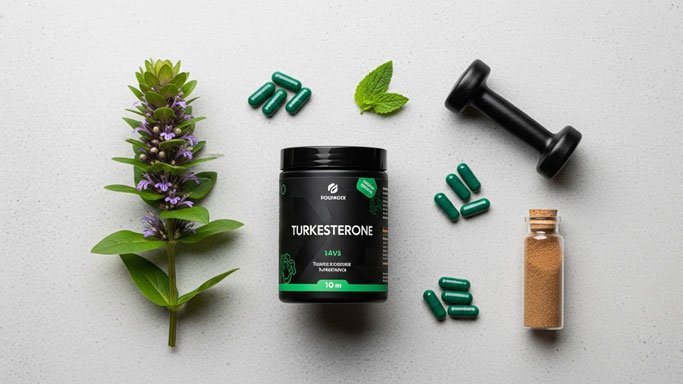
Turkesterone is a naturally occurring ecdysteroid, a class of steroidal compounds found in plants and insects. It is most notably extracted from Ajuga turkestanica—a plant native to Central Asia. Unlike anabolic steroids, it lacks direct androgenic or estrogenic activity, making it distinct in both mechanism and regulatory status.
For athletes, Turkesterone is marketed as a plant-based supplement purported to support muscle growth, recovery, and adaptation. As of 2024, it is not scheduled as a controlled substance or specifically prohibited by major anti-doping agencies, but it remains an unapproved supplement for sports performance.
History & Development
Turkesterone was first isolated in the 1970s during research into ecdysteroids’ effects on plant and insect development. Interest in its potential for human use arose from anecdotal reports and animal studies suggesting anabolic-like effects. In the 2010s, the supplement industry began emphasizing plant-derived ecdysteroids for athletes, with Turkesterone leading this trend.
Despite widespread use in the fitness community, robust human trials remain scarce. Most existing data derive from in vitro or animal models, highlighting the need for more controlled human studies to clarify its safety and efficacy.
How Turkesterone Works
Mechanism of Action
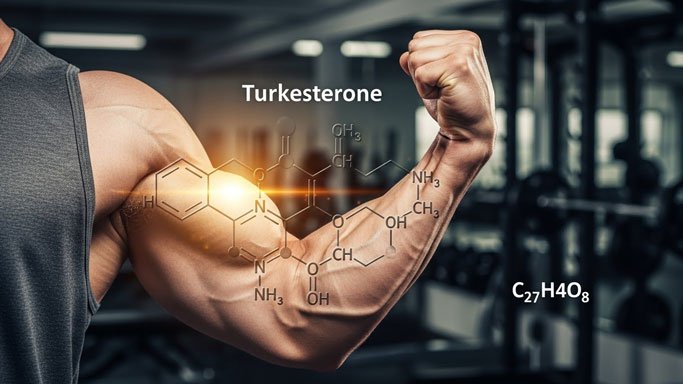
- Binds to ecdysteroid receptors in muscle and other tissues (distinct from androgen receptors)
- May promote protein synthesis via enhanced mRNA translation
- Could influence cellular stress responses, oxidation, and adaptation pathways
- Appears to have minimal hormonal (testosterone/estrogen) interaction in humans
- No direct conversion to human steroid hormones
Biological Effects
- Possible increase in protein synthesis in muscle cells
- May support muscle cell adaptation to stress
- Limited evidence of influence on glucose metabolism
- No reliable androgenic or estrogenic effects in humans
- Does not appear to impact reproductive hormone levels in standard doses
Benefits of Turkesterone

Muscle Support and Protein Synthesis
Turkesterone is hypothesized to support muscle growth by enhancing protein synthesis pathways in muscle cells. This effect is attributed to its action on ecdysteroid receptors, rather than traditional androgenic pathways.
However, direct evidence from human studies is lacking and no published, peer-reviewed trials have confirmed significant increases in muscle size or strength in athletes using Turkesterone supplements. Most available evidence is extrapolated from animal models or cell culture research.
Recovery and Adaptation
Athletes often turn to Turkesterone for potential effects on recovery. Theoretically, by mitigating exercise-induced cellular stress and promoting protein repair, it might help muscles adapt to repeated resistance training.
No verified human trials demonstrate concrete improvements in post-exercise muscle recovery compared to placebo. Reports of enhanced adaptation remain anecdotal and require further investigation.
Endurance and Training Volume
Some users claim increased endurance and training capacity while using Turkesterone supplements. The proposed mechanism involves improving cellular adaptation to prolonged exercise stress.
While some pilot studies in animal models have suggested ecdysteroids may improve endurance, no direct evidence exists from human trials on Turkesterone and exercise performance.
Body Composition
Anecdotes and preliminary research propose that Turkesterone may positively impact body composition by supporting lean muscle mass accrual while limiting fat gain. The supplement’s non-androgenic profile is preferred by athletes concerned with hormonal side effects.
Once again, there are no published human studies conclusively demonstrating improved body composition outcomes with its use.
Reduced Hormonal Side Effects
Because Turkesterone does not bind to or activate androgen receptors in the same way as conventional anabolic steroids, it is unlikely to cause androgenic or estrogenic side effects.
This aspect makes it an attractive option compared to anabolic steroids, but the long-term impact on human hormones and metabolism remains unclear.
Potential Metabolic Benefits
Limited early research has explored ecdysteroids’ possible effects on glucose metabolism and insulin sensitivity.
To date, no robust human studies with Turkesterone supplementation have confirmed any metabolic advantage or clinical benefit.
Side Effects & Safety
Gastrointestinal Discomfort
Some users report mild digestive symptoms (bloating, nausea, diarrhea) after starting Turkesterone supplements. These effects are typically dose-dependent and transient.
Unknown Long-Term Risks
There are no long-term human safety studies for Turkesterone. The absence of androgenic/estrogenic effects may reduce certain risks, but possible impacts on metabolism, organs, or endocrine function have not been systematically assessed.
Allergic Reactions
As with any botanical supplement, there is a theoretical risk of allergic reactions in sensitive individuals. No confirmed cases of severe reactions have been documented in medical literature.
Interaction with Medications
Drug–supplement interactions have not been studied. Athletes on prescription medications should consult a healthcare professional before using Turkesterone.
Adulteration and Contaminants
Unofficial or poorly regulated supplements are at risk of contamination or adulteration, which may impose additional health risks and anti-doping concerns.
Interactions
No documented interactions exist, but lack of research means possibilities cannot be excluded.
Pros & Cons (Table)
| Pros | Cons |
|---|---|
| No documented androgenic side effects | Limited human research available |
| Non-hormonal mechanism | Long-term safety unknown |
| May support muscle adaptation | Effects mostly anecdotal |
| Legal in most jurisdictions (2024) | Possible GI discomfort for some users |
| Popular with athletes seeking natural options | High risk of supplement contamination |
| No evidence of impacting testosterone/estrogen | No verified performance advantage |
How Athletes & Bodybuilders Use Turkesterone
Practical Usage Scenarios
- Bodybuilders seeking non-hormonal muscle support during resistance training.
- Endurance athletes experimenting with supplements for recovery and adaptation.
- Recreational exercisers using plant-based products for general wellness.
Timing, Forms, & Implementation
- Typical forms: capsules and powders standardized to specific Turkesterone percentages
- Common daily doses: 250–500 mg (unverified for efficacy or safety)
- Often taken with meals to reduce potential GI symptoms
Monitoring & Safety Notes
Athletes should track physiological responses, avoid other unverified supplements, and discontinue immediately if adverse effects occur. Medical supervision is advised, especially for elite competitors or those on prescription medications.
Comparison to Similar Compounds
Comparison Table
| Compound | Use | Mechanism | Effect Size | Risks | Regulatory Status |
|---|---|---|---|---|---|
| Turkesterone | Supplement | Ecdysteroid receptor activation | Unknown [citation needed] | Mild GI, unknown long term | Not banned (2024) |
| Ecdysterone | Supplement | Similar ecdysteroid action | Potentially small [citation needed] | Mild, poorly studied | Not banned (2024) |
| Creatine | Supplement | Boosts ATP in muscle | Moderate | Mild GI, rare kidney stress | Approved, widely allowed |
| Testosterone | Hormone Rx | Androgenic hormone | Large | Many, significant | Controlled, banned in sport |
Analysis
Compared to established ergogenic aids like creatine, Turkesterone’s effects are unproven in humans. Ecdysterone shares a similar natural origin but its effects remain only modestly supported by preliminary research. Unlike testosterone, it is non-hormonal and carries a very different risk profile and legal status.
Legality & Regulatory Status
- US FDA: Not an approved dietary ingredient; not scheduled or controlled
- WADA: Not specifically listed as prohibited as of 2024; ecdysteroids under review
- EMA: Not regulated as a medicine or controlled substance
- UK MHRA: Not approved as a medicine, sale legal as supplement
- Australia TGA: Not scheduled; not listed as approved medicine or banned drug
Contaminated products may result in anti-doping violations; always verify third-party testing.
Where to buy “Turkesterone”?
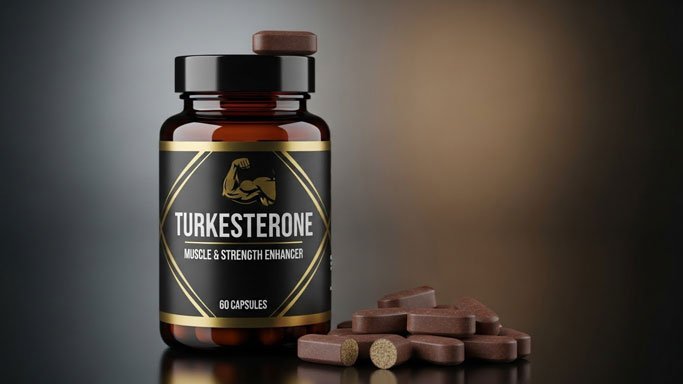
Turkesterone is not classified as a controlled substance or prescription medicine in most countries. Products are available online and in supplement stores as herbal or natural sports supplements.
Athletes should only consider products with third-party certification and transparent sourcing, as contamination or mislabeling pose risks for anti-doping violations.
Alternatives to Turkesterone
- Creatine Monohydrate — Multiple human trials demonstrate improved muscle strength, size, and recovery (Kreider et al., 2017, PubMed ID: 28615996).
- Protein Supplementation — Proven to enhance muscle protein synthesis and recovery (Morton et al., 2018, PubMed ID: 28698222).
- Beta-Alanine — Evidence suggests increased exercise capacity and muscular endurance (Derave et al., 2007, PMID: 17690198).
- Ecdysterone — Early human research shows modest anabolic potential, but effects less pronounced than protein or creatine (Isenmann et al., 2019, PubMed ID: 31123801).
- Branched-Chain Amino Acids (BCAAs) — May help with muscle recovery and performance, though benefits are supplemental to whole protein (Fouré & Bendahan, 2017, PubMed ID: 28934166).
Frequently Asked Questions (FAQ)
1. What is Turkesterone?
It is a plant-derived ecdysteroid supplement promoted for muscle and performance benefits in athletes.
2. Is there any human research supporting it for muscle growth?
No direct, robust human trials confirm improved muscle growth or strength from Turkesterone supplements [citation needed].
3. Is it a steroid?
While classified as an ecdysteroid, it does not possess the androgenic effects typical of synthetic or anabolic steroids.
4. Does Turkesterone increase testosterone?
Current evidence suggests it does not measurably affect human testosterone or estrogen levels.
5. Is Turkesterone legal for athletes?
As of 2024, it is not specifically banned but may be under review by some anti-doping organizations.
6. Are there side effects?
Some users experience mild gastrointestinal symptoms; long-term effects are unknown.
7. Can women use it safely?
No gender-specific risks have been documented, but the lack of research limits confident recommendations.
8. How does it compare to creatine?
Creatine’s benefits are clinically proven and far more robust than any evidence for Turkesterone.
9. What is the typical dose?
Supplements often recommend 250–500mg daily, but this is not based on verified scientific research.
10. Can it cause a positive doping test?
Pure Turkesterone is not banned, but contaminated supplements can lead to anti-doping violations.
11. How long should I use Turkesterone?
There are no established guidelines for safe or effective duration due to lack of human data.
12. Are there safer alternatives?
Yes—creatine, protein, and beta-alanine all have superior safety and efficacy evidence.
13. Is it suitable for vegans?
Turkesterone is plant-derived and typically vegan, but check capsules for animal gelatine.
14. Does it help with fat loss?
There is no conclusive evidence that Turkesterone supports fat loss in humans [citation needed].
15. Is a prescription required?
No prescription is needed; products are sold as over-the-counter supplements in most places.
Conclusion
Turkesterone remains a promising—but under-researched—plant-based supplement in the athlete community. Its appeal lies in its natural origin and theoretical muscle support without androgenic risks. However, the absence of robust human research means any performance or health benefits are speculative.
Athletes considering Turkesterone should weigh the unverified benefits against safety uncertainties and the high risk of supplement contamination. Alternatives like creatine, protein, and beta-alanine have established efficacy and safety and should remain the first-line ergogenic aids.
Always consult a medical professional before using new supplements, especially for competitive athletes who must avoid inadvertent doping.
Athlete’s Final Checklist
- Confirm third-party supplement testing and transparent sourcing.
- Discontinue use immediately if any adverse effects occur.
- Track and report all supplement use for anti-doping compliance.
- Avoid poly-supplementation with other unverified or proprietary blends.
- Do not use Turkesterone as a substitute for proven training and nutrition strategies.
- Consult a medical or performance professional before starting.
- Stay informed about regulatory changes and anti-doping updates.
- Document and monitor physical response for at least four weeks after introduction.
Studies & References
- Antonio J, Silver T, Lukowiak A, Jiannine L, et al. A Preliminary Investigation of Turkesterone: It’s Not Deca. 2024; Research in Health and Medicine. Investigated 500 mg/day Turkesterone vs placebo over 4 weeks in active adults; no significant changes in body composition observed (Human clinical investigation). Research Directs
- Study on acute metabolic and hormonal responses to Turkesterone dosing in healthy males found no statistically significant effects on IGF-1, resting metabolic rate, or key metabolic markers (Human exploratory study). MDPI
- Guibout L, Mamadalieva N, Balducci C, Girault J-P, Lafont R. The minor ecdysteroids from Ajuga turkestanica. Phytochemical analysis identifying turkesterone among other ecdysteroids in plant extract (non-human chemical study). PubMed
- Study synthesizing turkesterone derivatives and evaluating in vitro activity against insect ecdysteroid receptors (mechanistic/in vitro research). PubMed
- No robust human clinical trials have yet demonstrated ergogenic, hypertrophic, or performance benefits for Turkesterone. Evidence remains limited to preliminary investigations and non-human research.