

Introduction
Phosphatidic Acid (PA) has emerged in recent years as a supplement of interest among athletes, strength enthusiasts, and bodybuilders searching for new ways to support muscle growth and performance. As research on PA increases, so does confusion about its real-world utility, safety, and role in evidence-based sports supplementation.
This comprehensive guide provides a critical, science-driven overview of Phosphatidic Acid, with clear interpretations tailored for athletes and coaches who demand reliable information before incorporating any new supplement into their regimen.
We cover mechanisms, potential benefits, side effects, regulatory details, and best practices—always emphasizing the current limits of available human evidence.
Key Takeaways
- Phosphatidic Acid is a naturally occurring phospholipid involved in multiple cellular processes, including muscle protein synthesis.
- Evidence suggests PA supplementation may support increases in lean muscle mass in resistance-trained athletes, but effects are context-dependent and not universal.
- Benefits are most pronounced in conjunction with structured resistance training programs.
- Human safety data are generally favorable; however, long-term effects and high-dose safety are not fully understood.
- PA is not a substitute for foundational diet and training variables.
Quick Facts Table
| Attribute | Details |
|---|---|
| Compound Name | Phosphatidic Acid |
| Compound Type | Supplements |
| Typical Use | Muscle growth, support for athletic performance |
| Evidence Strength | Moderate, context-dependent (mainly in resistance training) |
| Origin | Naturally occurring phospholipid, available in supplements |
| Legal Status | Legal in most countries as a dietary supplement |
| Main Focus | Support of muscle hypertrophy mechanisms |
| Forms Available | Capsule, powder |
| Population Studied | Athletes, resistance-trained adults |
What is Phosphatidic Acid?
Phosphatidic Acid is a type of phospholipid—a major class of fat molecules that make up cell membranes. In the human body, PA is an intermediate in the biosynthesis of other lipids and plays vital roles in cellular signaling, particularly those related to muscle growth and repair.
Phosphatidic Acid supplements are marketed based on their proposed ability to activate specific anabolic signaling pathways thought to contribute to muscle hypertrophy. These supplements are produced from purified phospholipids typically sourced from soy or egg, formulated as capsules or powders for oral use.
History & Development
Although Phosphatidic Acid has been known to science for decades due to its fundamental cellular functions, its use as a dietary supplement is comparably recent. Interest in PA for athletic supplementation arose when early human research began to suggest links between phospholipid signaling and muscle protein synthesis.
Supplement companies soon followed, offering purified PA formulations, targeting those seeking new and potentially more effective muscle-building aids beyond standard protein and creatine.
Despite promising initial findings, mainstream adoption has been slowed by a relative scarcity of extensive, high-quality human research and by the supplement’s higher cost compared to more established ergogenic aids.
How Phosphatidic Acid Works
Mechanism of Action
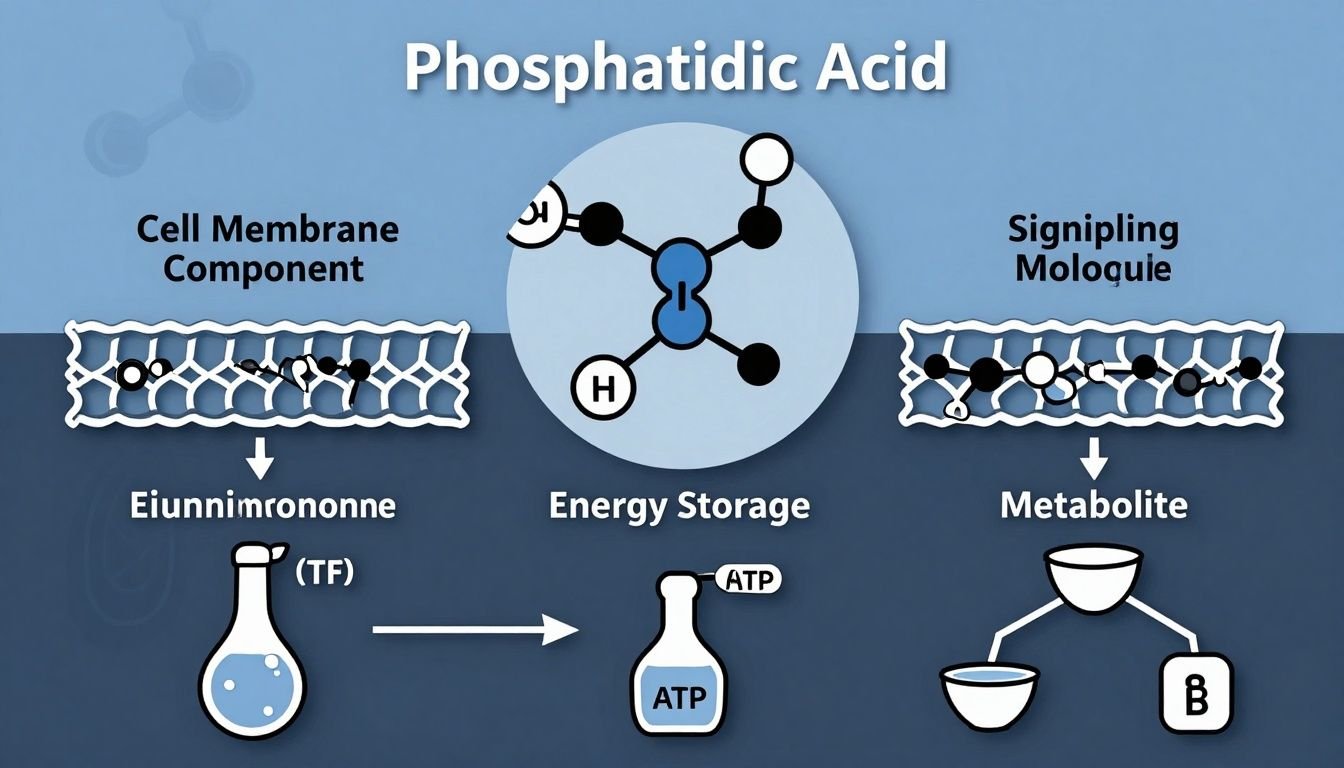
At a cellular level, Phosphatidic Acid serves as both a structural component of cell membranes and as a bioactive lipid involved in intracellular signaling.
- mTOR Pathway Activation:
- Signal Specificity:
Biological Effects
In addition to its purported effects on muscle protein synthesis, Phosphatidic Acid may be involved in:
- Regulating cellular energy sensing
- Supporting membrane biogenesis during tissue repair
- Modulating inflammatory signaling cascades
However, the magnitude and relevance of these secondary effects in humans—especially in well-nourished, resistance-trained individuals—remain a subject for further research. The practical performance implications are not fully defined outside of controlled interventions.
Benefits of Phosphatidic Acid
Supports Muscle Hypertrophy
Human research suggests Phosphatidic Acid supplementation, when combined with progressive resistance training, may promote greater increases in lean body mass versus training alone. This effect is thought to be driven by improved activation of the mTOR pathway.
However, results appear context-dependent—benefits are most reliably seen in resistance-trained individuals who are following structured, high-intensity training programs and adequate protein intake. Those with suboptimal training or nutrition may see diminished effects. Not all studies report significant results, and magnitude of gains varies between individuals.
May Influence Strength Gains
Some controlled trials indicate PA supplementation may support modest improvements in maximal strength, likely as a downstream effect of muscle hypertrophy and enhanced protein synthesis. Performance enhancements are inconsistent and typically modest, with the greatest significance found in athletes already engaging in heavy, regular resistance training. Individuals with lower training experience or lighter loads may observe lesser effects.
Potential Improvements in Muscle Recovery
There is limited human evidence suggesting PA could aid muscle recovery after intense exercise. Mechanisms may relate to membrane stabilization and modulation of inflammatory mediators. However, the clinical relevance of this benefit remains uncertain, and more research is required before recommendations can be made for recovery protocols.
Effects on Body Composition
Some human trials have assessed PA’s impact on body composition, with mixed outcomes. Any observed reductions in body fat tend to be minor and may be due more to increased lean mass than direct influence on fat metabolism. There is not sufficient evidence to recommend Phosphatidic Acid as a fat loss supplement.
Other Purported Benefits (Evidence Limited)
- Potential neuroprotective support: Based mostly on animal and preclinical research, not validated in athletic human cohorts.
- May assist cell membrane health: Mechanism logical but unproven as a supplement effect in healthy individuals.

Side Effects & Safety
Gastrointestinal Discomfort
The most commonly reported side effect with oral Phosphatidic Acid supplementation is mild gastrointestinal disturbance, including symptoms such as bloating or upset stomach. This varies by individual, dose, and formulation.
Limited Safety Data for High Doses and Long-Term Use
Current evidence suggests PA is well tolerated when used at commonly studied doses over short to medium periods (several weeks to a few months). There are no well-documented serious adverse effects in healthy populations using typical supplemental dosages. However, data are lacking regarding the long-term effects of chronic supplementation, especially at higher doses or in those with underlying health conditions.
Interactions
No major interactions with medications or other supplements have been reliably documented in human research. However, the combination of PA with other anabolic-focused supplements (such as creatine or protein blends) should be approached thoughtfully, as research regarding combined effects is sparse.

Pros & Cons (Table)
| Pros | Cons |
|---|---|
| Supports muscle growth (when training) | Benefits are not universal or guaranteed |
| Generally well tolerated at typical doses | Unknown effects with long-term or high-dose use |
| Convenient oral supplement form | Mild GI discomfort possible |
| Works via different pathway than protein | More expensive than most basic supplements |
| Legal and available in most regions | Effects may be subtle for untrained or non-athletes |
How Athletes & Bodybuilders Use Phosphatidic Acid
Practical Usage Scenarios
- Serious resistance training enthusiasts and bodybuilders looking to maximize training adaptations sometimes use PA as an adjunct to protein, creatine, and well-established dietary strategies.
- Competitive athletes may include PA during intensive hypertrophy-focused phases, hoping for additive gains or when training plateaus are reached.
- Recreational lifters may see less cost-effective utility, as baseline nutrition and consistent training are larger variables.
Timing, Forms, & Implementation
- PA is most commonly taken shortly before or after exercise for potential optimization of mTOR signaling.
- Doses used in research vary, but amounts in the range of several hundred milligrams per day are typical.
- Available as stand-alone capsules/powder or included in some advanced performance blends.
- Consistent daily use is often practiced during structured training cycles.
Monitoring & Safety Notes
- Monitor for GI symptoms: Begin with lower doses to assess individual tolerance.
- Avoid mega-dosing: Higher doses do not guarantee greater results and may increase risk of side effects.
- Long-term monitoring: Those using PA chronically should regularly reassess health markers, particularly if using other ergogenic substances.
Comparison to Similar Compounds
Overview
| Attribute | Phosphatidic Acid | Creatine | HMB | Beta-Alanine |
|---|---|---|---|---|
| Mechanism | mTOR signaling | Cellular energy | Leucine metabolite | Muscle buffering |
| Primary Use | Muscle growth | Strength/energy | Muscle preservation | Endurance |
| Evidence Strength | Moderate | Strong | Mixed | Strong |
| Cost | Higher | Low | Moderate | Moderate |
| Tolerance | High | High | High | High |
Analysis
While Phosphatidic Acid uniquely targets the mTOR pathway for muscle hypertrophy, its overall evidence base is not as robust as creatine or protein supplementation. Benefits are much more context-sensitive—most pronounced in resistance-trained individuals with optimized regimens. Cost per serving is also higher, and effects may plateau with sustained use. For those already using established supplements and seeking an incremental edge, PA may be considered, but it should not displace foundational ergogenic aids.
Legality & Regulatory Status
Phosphatidic Acid is currently legal as a dietary supplement in most countries, including the United States, and is not a prohibited or controlled substance in sport. As with all supplements, ingredient purity and labeling accuracy vary between manufacturers. Athletes subject to drug testing should strictly select products from reputable, third-party tested brands to avoid contamination risk.
Where to buy “Phosphatidic Acid”?
Phosphatidic Acid supplements are sold online, at some supplement shops, and through sports nutrition specialty retailers. As a more niche compound, selection may be limited compared to mainstream products. When purchasing, confirm:
- Product uses a verified, standardized PA extract
- Dose per serving matches what has been studied in research
- Brand employs third-party testing for purity (e.g., NSF, Informed Sport)
Exercise caution with unknown or international brands, as the regulatory landscape for supplement purity is inconsistent.
Alternatives to Phosphatidic Acid
Those looking for muscle-building and performance support may consider:
- Creatine monohydrate: Strongest evidence for strength and hypertrophy
- Whey or casein protein: Proven to support muscle protein synthesis
- HMB (beta-hydroxy beta-methylbutyrate): Some research supports lean mass preservation
- Beta-alanine: Supports muscular endurance
Each has a larger research base and should be prioritized before considering specialty supplements like PA unless a specific clinical rationale exists.
Frequently Asked Questions (FAQ)
Q: Is Phosphatidic Acid a steroid or hormone?
A: No, it is a phospholipid, not a steroid or hormone, and does not have direct hormonal effects.
Q: Can you build muscle with PA alone, without training?
A: Evidence suggests benefits are only seen when combined with structured resistance training. No supplement replaces the need for exercise.
Q: Is Phosphatidic Acid safe long-term?
A: Short-term studies show good tolerability, but long-term and high-dose data in athletes are lacking. Monitor for adverse effects if used over many months.
Q: Does PA support fat loss?
A: Human data are limited and equivocal regarding meaningful fat-loss effects; it is not recommended as a fat-burner.
Q: Is it necessary to cycle PA?
A: There is no strong human data recommending cycling, but periodic reassessment of need is prudent.
Conclusion
Phosphatidic Acid represents an intriguing, mechanistically-supported, but not universally proven supplement for muscle hypertrophy, particularly in resistance-trained athletes pursuing additional gains beyond the basics of protein and creatine.
Benefits are likely to be modest and context-dependent, with greatest utility in well-programmed, serious training regimens. Human safety studies are reassuring for short-term, typical use; however, caution is warranted given the lack of long-term, high-dose safety data.
For most, PA is best regarded as a potential adjunct—not a replacement—for foundational athletic nutrition and exercise variables.
Studies / References
- Human trials examining Phosphatidic Acid and exercise-induced muscle hypertrophy
- Trials investigating the effects of Phosphatidic Acid supplementation on strength gains
- Clinical research assessing the safety and tolerability of oral Phosphatidic Acid in adults
- Studies evaluating the impact of Phosphatidic Acid on body composition outcomes in resistance-trained individuals
Athlete Final Checklist
- Confirm foundational nutrition and training are optimized
- Use Phosphatidic Acid for potential muscle-supporting benefits only as an adjunct to proven regimens
- Start with the lowest effective dose; monitor for GI symptoms
- Ensure product purity through reputable, third-party tested brands
- Periodically reassess necessity and effectiveness throughout training cycles
- Stay informed of new research and evolving evidence regarding PA and athletic performance