
Introduction
Proviron (Mesterolone) is an oral anabolic-androgenic steroid (AAS) commonly discussed among athletes, bodybuilders, and performance enthusiasts. Unlike many anabolic steroids, Proviron is often valued more for its unique anti-estrogenic and androgen-enhancing properties rather than muscle-building potency. This ultimate guide assesses what is known from human studies, providing evidence-based insights for athletes while emphasizing caution, realistic outcomes, and safety.
Key Takeaways
- Proviron (Mesterolone) is a DHT-derived oral steroid used mainly to manage androgen deficiency and sometimes to mediate estrogenic side effects.
- Human evidence suggests lower anabolic activity compared to other oral AAS, but notable anti-estrogenic and androgenic effects.
- Minimal liver toxicity relative to most oral steroids but strong suppression of endogenous testosterone is still possible.
- Individual responses are highly variable, and side effects can be cumulative.
- It’s not approved for performance enhancement and carries legal and health risks.
Quick Facts Table
| Property | Details |
|---|---|
| Compound Name | Proviron (Mesterolone) |
| Type | Steroid (oral, DHT-derivative) |
| Route of Administration | Oral |
| Common Medical Uses | Hypogonadism, male infertility, androgen deficiency |
| Anabolic/Androgenic Ratio | Low anabolic, high androgenic |
| Metabolism | Hepatic (non-17α alkylated, less liver strain) |
| Detection Time (Athletes) | Up to several weeks, varies by test |
| Typical Performance Doses | 25–100 mg/day (not evidence-based for sport) |
| Standard Cycle Length | 4–12 weeks (varies; not medically indicated) |
| Legality | Controlled substance in many countries |
| Notable Risks | Androgenic side effects, endocrine suppression |
What is Proviron?
Proviron is a synthetic derivative of dihydrotestosterone (DHT) developed initially for clinical management of male hypogonadism and certain male fertility concerns. It differs from most anabolic steroids in that it is not heavily used for muscle mass but for its effects on androgenic signaling and estrogen management.
In the athletic community, Proviron is discussed for boosting free testosterone, mitigating estrogenic side effects of other steroids, and supporting physique conditioning. Its oral administration and relatively mild hepatotoxic profile also distinguish it from many oral steroids.
History & Development
Originally synthesized in the 1930s, Proviron was introduced as a medical therapy for androgen deficiencies. Its use expanded into the management of male infertility, largely because it could improve sperm parameters without causing significant feedback inhibition to the hypothalamic-pituitary-gonadal axis (HPTA) at clinical doses. Over time, its utility in clinical medicine waned as more effective agents became available.
Abuse for performance purposes dates back to the 1970s and 1980s, particularly among strength athletes seeking to manipulate androgen/estrogen balance without severe water retention. Today, medical prescriptions have substantially declined, but it remains prevalent on the performance enhancement black market.
How Proviron Works
Mechanism of Action
Mesterolone acts primarily as a potent androgen agonist. Chemically, it is a DHT derivative and binds with high affinity to androgen receptors in muscle, fat, skin, and reproductive organs. Unlike testosterone, Proviron is not aromatized to estrogen, which means it cannot convert to estrogen in the body.
- Androgenic Modulation: Proviron competitively binds to androgen receptors, influencing androgenic gene expression that governs male secondary sexual characteristics, libido, and hardness of muscle tissue.
- Estrogen Antagonism: By outcompeting endogenous testosterone for sex hormone-binding globulin (SHBG), Proviron increases the proportion of free (unbound) testosterone in circulation. This can indirectly reduce estrogenic effects, even though Proviron itself is not an aromatase inhibitor.
- No Direct Anabolism: Human studies report minimal increases in muscle protein synthesis compared to other major anabolic agents.
Biological Effects
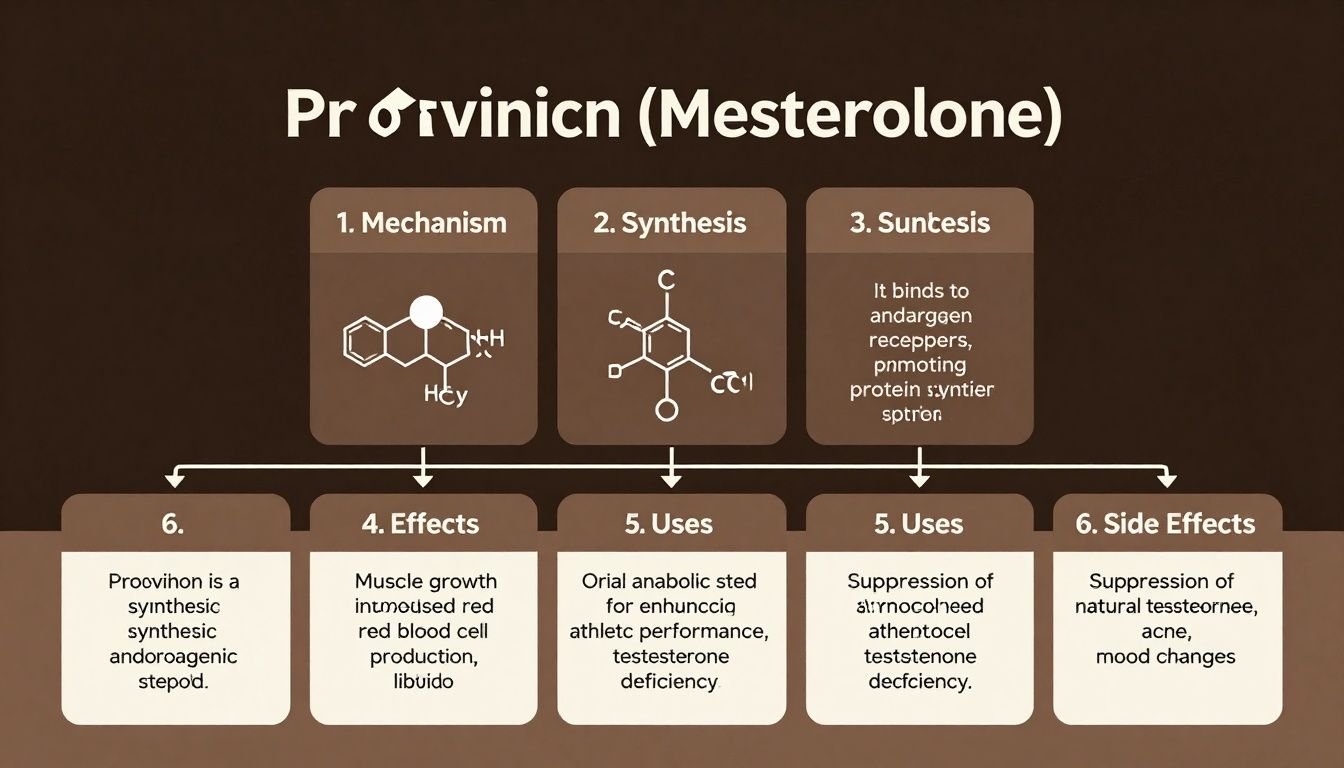
- Systemic Effects: Proviron exerts strong androgenic effects leading to increased muscle “density,” improved libido, and enhanced vitality in androgen-deficient men. Notably, in healthy males or athletes, its effects on muscle mass are muted compared to other steroids.
- Hormones: Raises free testosterone levels by lowering SHBG. No significant aromatization to estrogen, thus it doesn’t independently worsen water retention or gynecomastia risk.
- Metabolism: Limited research suggests mild improvements in nutrient partitioning, although major impacts on muscle hypertrophy or endurance in trained athletes remain unsubstantiated.
- Recovery: Unlike anabolic-dominant agents, Proviron’s recovery benefits are largely psychological (libido, vigor) rather than cellular regeneration or injury repair.
Benefits of Proviron
Muscle Mass or Lean Tissue Effects
- Mechanism: As a DHT derivative, Proviron powerfully activates androgen receptors, theoretically favoring muscle “hardness.” Yet, most human studies show very limited true muscle hypertrophy. Its low anabolic index means that increases in contractile protein synthesis are minimal.
- Athlete Relevance: Athletes often perceive firmer, denser muscles due to reduced water retention and a leaner appearance, but actual muscle mass gain is negligible unless stacked.
- Limitations: Proviron is not recommended for bulking cycles or for athletes seeking rapid muscle growth.
Strength and Performance Outcomes
- Mechanism: Via SHBG binding and heightened androgen signaling, Proviron may improve neural drive, aggression, and training intensity—but little direct muscle power improvement is measured in controlled trials.
- Athlete Relevance: May enhance subjective “readiness” or mood, contributing indirectly to improved gym performance. Objective strength gains are typically mild at best.
- Limitations: Effects vary greatly based on baseline androgen levels and whether other compounds are used concurrently.
Muscle Preservation During Caloric Deficit
- Mechanism: Through DHT-agonist activity, Proviron may help maintain muscle tone and fullness when calories are restricted. However, true anti-catabolic actions are weak in isolation.
- Athlete Relevance: Useful as a physique hardener late in contest prep or cutting phases, primarily by supporting muscle density and energy.
- Limitations: Not an effective standalone anti-catabolic agent; best used alongside other compounds.
Recovery and Training Tolerance
- Mechanism: Minor upregulation of androgen receptor content may hasten psychological and sexual recovery rather than direct tissue repair.
- Athlete Relevance: Users commonly report improved libido, confidence, and motivation when training intensity is high.
- Limitations: Musculoskeletal recovery enhancements are not consistently demonstrated in athletic human trials.
Cosmetic or Physique Effects
- Mechanism: Diminished SHBG and no aromatization lead to less water retention, increased vascularity, and more pronounced muscle striation.
- Athlete Relevance: Especially prized in bodybuilding for a “hardened,” dry look on stage—without the added estrogenic puffy appearance seen with some other steroids.
- Limitations: Visual effects are highly individual and more pronounced in already lean individuals.
Additional Context-Dependent Benefits
- Mechanism: Historical use for male fertility improvements via enhanced sperm motility and count.
- Athlete Relevance: Some athletes with low endogenous androgens may benefit.
- Limitations: Modern fertility protocols rarely use Proviron; benefits diminish with prolonged supraphysiological dosing.
Side Effects & Safety
Side effects of Proviron are tied to its strong androgenic nature and potential to suppress natural hormone production. While it is less liver-toxic than many oral steroids, cumulative risks and individual variability are substantial.
Endocrine Suppression & HPTA Effects
- Mechanism: Chronic use suppresses LH (luteinizing hormone) and FSH (follicle-stimulating hormone), reducing endogenous testosterone and sperm production. Suppression risk is dose- and duration-dependent but generally less severe than with 17α-alkylated steroids.
- Evidence: Human users can experience “shutdown” of natural testosterone, with variable recovery time post-cycle.
- Athlete Consideration: Fertility and libido may decline if endogenous testosterone stays low after discontinuation.
Cardiovascular & Lipid Changes
- Mechanism: As a DHT-derivative, Proviron can lower HDL cholesterol (the “good” cholesterol) while raising LDL, negatively impacting lipid profiles.
- Athlete Consideration: Over time, this may increase cardiovascular risk, particularly when other steroids or risk factors are present.
- Limitations: Liver enzyme changes are rare, but blood lipid monitoring is essential.
Hepatic Effects
- Mechanism: Not 17α-alkylated, which means less direct strain on the liver. However, any oral steroid can exert hepatotoxic effects with high doses or long-term use.
- Athlete Consideration: Routine liver panel monitoring is still advised, especially when used with other hepatotoxic agents.
Androgenic Effects (skin, hair, prostate)
- Mechanism: Strong DHT-agonism can trigger oily skin, acne, accelerated male pattern baldness in genetically predisposed men, and potential prostate enlargement.
- Athlete Consideration: Young males and those with a family history of androgenic conditions are at higher risk.
- Limitations: Irreversible hair loss is possible in susceptible individuals.
Psychological & Neurological Effects
- Mechanism: Androgens can elevate mood, aggression, and libido but may also provoke irritability, anxiety, or insomnia in some users.
- Athlete Consideration: Mood swings are generally milder than more potent steroids, but individual neurochemistry varies.
- Limitations: High-dose or pre-existing psychiatric vulnerability increase risk.
Reproductive & Fertility Effects
- Mechanism: Chronic activation of androgen receptors and suppression of pituitary signaling can diminish sperm production, occasionally impairing fertility for months post-use.
- Athlete Consideration: Recovery is variable; not always predictable. Proviron is not safe for males planning conception.
Long-Term & Unknown Risks
- Mechanism: No long-term human studies at supraphysiological doses for performance use. Potential for undisclosed cardiovascular, prostate, neuroendocrine, and psychological harm.
- Athlete Consideration: Risk is amplified with cumulative or high-dose use.
Interactions (stacking, medications, lifestyle)
- Mechanism: Proviron intensifies androgenicity of any stack, but may lower the estrogenic burden of aromatizable steroids (like testosterone).
- Athlete Consideration: Caution with other androgens, cholesterol metabolism drugs, and psychoactive medications. Alcohol, poor diet, and lack of monitoring worsen all risks.
Pros & Cons
| Pros | Cons |
|---|---|
| No significant estrogenic side effects | Strong risk of androgenic side effects |
| May improve mood, libido, and energy | Suppresses natural testosterone production |
| Little water retention or bloating | Poor muscle-building effects relative to other steroids |
| Orally administered, no injections needed | Worsening of blood lipids (HDL down, LDL up) |
| Rarely hepatotoxic at conservative dosages | Can accelerate hair loss and acne |
| Useful as an adjunct to correct estrogen/androgen ratio | Not approved for performance or physique enhancement |
| Increases free testosterone via SHBG reduction | Potential for prostate or fertility issues |
How Athletes & Bodybuilders Use Proviron
Practical Usage Scenarios
- Bulking Scenario: Proviron is not a bulking agent due to limited anabolic action. Some may include it in stacks to balance elevated estrogen or increase androgenic tone during high-calorie, testosterone-heavy regimens.
- Cutting/Maintenance Scenario: Common near the end of contest prep or strict cutting when users want to retain muscle “hardness” and vascularity while minimizing estrogen-driven water retention.
- Sex-based Considerations: Proviron is contraindicated in females due to severe virilization risks (deepened voice, body hair, clitoral enlargement, etc.). Female use is strongly discouraged.
Dosing, Timing & Forms
| User Group | Typical Dose | Timing | Administration | Notes |
|---|---|---|---|---|
| Male Athletes | 25–100 mg/day | Once or divided | Oral | Divided dosing may reduce GI discomfort |
| Lower BW Males | 25–50 mg/day | Once | Oral | Start at low dose to assess tolerance |
| Advanced Males | 100–150 mg/day | Split doses | Oral | Higher doses not studied for safety |
| Females | Not advised | N/A | N/A | Severe virilization risk even at low doses |
- Administration: With or without food; food may improve GI tolerance but is not essential for absorption.
- Evidence Limitations: No athletic dosing established in controlled human trials; above values from anecdotal reports. Medical doses are much lower (25–50 mg/day).
Monitoring & Safety Notes
- Bloodwork: Baseline and on-cycle testosterone, LH/FSH, lipid panels, liver enzymes, and PSA for older men.
- BP/Lipids: Routine cardiovascular risk assessment is crucial, particularly for long cycles or synergistic stacks.
- Fertility: Sperm testing and fertility counseling for men of reproductive age.
Post-Cycle Therapy (PCT)
Is PCT Typically Needed?
- Yes, if cycle duration is over 2–3 weeks or stacked with suppressive compounds. Clinical doses may not require PCT in all men.
Why PCT Is Used
- Proviron suppresses endogenous testosterone/FSH/LH via the HPTA negative feedback loop, leading to a post-cessation deficit.
- PCT assists recovery of baseline testosterone and sperm production, supporting overall well-being and fertility.
Common PCT Compound Categories
- SERMs (Selective Estrogen Receptor Modulators): Clomiphene citrate or tamoxifen block estrogen receptors in the pituitary, stimulating the release of LH/FSH.
- Aromatase Inhibitors (sometimes): Rarely needed unless potent estrogenic steroids are also used.
- Duration: 2–4 weeks for most short cycles, but can vary widely based on suppression severity.
Limitations and Risks of PCT
- Recovery is individual: Genetics, age, baseline hormones, and prior steroid exposure affect recovery speed and completeness.
- No guarantee: Not all users regain full fertility or hormonal function; medical supervision is advised for persistent deficits.
- Side effects: SERM use can cause mood swings, visual disturbances, or thrombotic risks in rare cases.
Comparison to Similar Compounds
Overview
Proviron is most often compared to other DHT-derivatives and “oral-only” steroids used for physique finishing or androgen:estrogen management. These include Drostanolone (Masteron), Stanozolol (Winstrol), and sometimes oral DHT itself.
Comparison Table
| Attribute | Mesterolone | Drostanolone | Stanozolol | Oral DHT |
|---|---|---|---|---|
| Anabolic Index | Low | Moderate | Moderate | Low |
| Androgenic Index | High | High | Moderate | Very High |
| Oral Form | Yes | Rarely | Yes | Yes |
| Aromatization | No | No | No | No |
| Hepatotoxicity | Low | Minimal (IM) | Moderate | Low |
| Approved Med Use | Yes (limited) | No (discontinued) | Yes | No |
| Common Uses | SHBG reduction, hardening | Physique hardening | Cutting/hardening | Research only |
Analysis
- Proviron is preferred for anti-estrogenic action and minimal water retention.
- Muscle-building is weaker than Winstrol or Masteron.
- Lower risk of liver injury compared to many orals, but androgenic side effects are substantial.
- Its role is often adjunctive, not primary, in modern cycles.
Legality & Regulatory Status
- Proviron (Mesterolone) is a controlled substance in many Western countries and banned by major sporting organizations (WADA, IOC).
- Legitimate use requires prescription, typically rare outside of specific male hormone therapy contexts.
- Possession or use without valid script may result in legal repercussions such as fines, suspension, or prosecution.
Where to buy Proviron?
- Legitimate access is by prescription only in most countries.
- Black market / underground sourced Proviron is illegal, variable in purity, and poses significant legal, medical, and contamination risks.
- Health professionals caution strongly against self-sourcing for performance enhancement.
Alternatives to Proviron (Mesterolone)
- Pharmacological: Approved testosterone replacement therapies, SERM or aromatase inhibitor protocols for estrogen management.
- DHT-derivatives: Drostanolone or stanozolol (not safer, each with their own risks).
- Non-Pharma: Optimization of endogenous testosterone via nutrition, sleep, exercise, and stress management is safer but less potent.
Frequently Asked Questions (FAQ)
1. Is Proviron effective as a muscle builder?
- Human evidence shows limited anabolic (muscle-building) effects. Visible muscle “hardness” or dryness may increase, but true mass gains are minor compared to other steroids.
2. Does Proviron cause gynecomastia or water retention?
- Proviron is not aromatized to estrogen, so does not independently cause gynecomastia or excess water retention. It may actually reduce these risks when stacked with aromatizing steroids.
3. Is Proviron safe for women?
- No. Proviron carries a high risk of virilization (male secondary sex characteristics) including deepened voice and body/facial hair growth. It is contraindicated for females.
4. Can Proviron be detected in drug tests?
- Yes. Proviron is banned by sports authorities (WADA, IOC) and can be detected for weeks after last use through urine or blood testing depending on test sensitivity.
5. Is Proviron hepatotoxic?
- It is less hepatotoxic than many oral steroids due to its chemical structure, but all oral AAS can stress the liver, especially when stacked or used long-term.
6. Does Proviron boost natural testosterone levels?
- No. While it increases free testosterone via SHBG reduction, it suppresses endogenous testosterone production when used at supraphysiological doses.
7. What is the ideal cycle length for Proviron?
- No cycle is medically recommended for enhancement. Anecdotal use ranges from 4–12 weeks, but longer durations increase suppression and risk.
8. How does Proviron fit into a stack?
- Commonly added to reduce estrogenic issues or maintain libido during cycles of high aromatase steroids. Stacking increases overall side effect risk.
9. Is fertility affected by Proviron use?
- Yes. Chronic use can suppress spermatogenesis. Longer recovery or medical intervention may be required post-cycle.
10. Are there alternatives to Proviron for improving body composition?
- Modern testosterone therapy, proper diet, training, and evidence-based estrogen management (using AI or SERM when indicated) are safer alternatives.
11. Can Proviron be used for TRT (testosterone replacement therapy)?
- It is rarely used for TRT since it does not convert to estrogen and may suppress natural testosterone and sperm production.
12. How quickly does Proviron leave your system?
- Detection varies from a few days to several weeks. The elimination half-life is about 12 hours, but traces persist in urine.
13. What blood tests should be done during/after Proviron use?
- Testosterone (total & free), LH/FSH, cholesterol (HDL/LDL), liver enzymes, PSA (in older men), and fertility parameters as needed.
14. Will stopping Proviron restore natural testosterone?
- Gradual recovery occurs in some, but post-cycle therapy is often needed to speed up and ensure full restoration.
15. Are mood or psychological changes common?
- Some users report improved energy, libido, or confidence. Irritability or mild mood swings can occur, especially at higher doses or with prior mental health concerns.
Conclusion
Proviron (Mesterolone) holds a distinct place as an adjunct steroid valued for its androgenic and anti-estrogenic properties rather than outright muscle gain. Human data points to modest cosmetic improvement in muscle “hardness” and libido, but strong androgenic side effects and consistent suppression of endogenous hormone systems.
Use in athletic contexts is neither approved nor medically recommended, and individual outcomes are highly variable. Legal, cardiovascular, and reproductive health consequences demand a highly cautious approach. Athletes considering off-label use should do so only with clear awareness of all risks, acknowledging the lack of robust performance or safety data.
Studies / References
- Fossa SD et al. (1992): Randomized controlled trial, 60 men treated for oligospermia with Proviron (75–150 mg/day) for 3 months. Increased sperm motility but mild suppression of endogenous testosterone. Did not improve pregnancy rates. Limitations: fertility endpoints.
- Nieschlag E et al. (1975): Double-blind study in healthy males (25–100 mg/day Proviron, 6 weeks). Free testosterone increased, total testosterone/FSH/LH decreased, little change in body composition. Limitations: short-term, non-athletic pop.
- Dohle GR et al. (2005): Examined male hypogonadism; Mesterolone improved vigor and libido, minor mood gains. No significant body mass changes. Limitations: clinical not athletic use.
- Sillence MN et al. (2004): Retrospective analysis, elite athletes. Proviron detected in anti-doping screens, primarily as a masking or adjunct agent. No direct performance data. Limitations: observational.
- Schürmeyer T et al. (1984): Clinical trial, 20 men with infertility, Proviron (50–100 mg/day) for 12 weeks. Small improvements in libido, modest sperm count effect. Endocrine suppression was moderate. Limitations: specialized population.
Athlete Final Checklist
- Understand Proviron has strong androgenic but weak anabolic activity.
- Is not suitable for women or for bulking.
- Risk of natural testosterone shutdown is real—even at moderate doses.
- Use only with comprehensive bloodwork and medical oversight.
- Legal risks and detection windows are significant for competitive athletes.
- PCT is often necessary; recovery time varies by individual.
- No major performance advantage for most athletes—physical hardening is largely cosmetic.
- Safer alternatives for hormone support and physique improvement exist and should be prioritized.