
Introduction
Beta-Alanine has become one of the most popular supplements in the athletic and bodybuilding world, thanks to its unique role in boosting high-intensity performance. Whether you’re focused on increasing training volume, improving sprint endurance, or maximizing muscle growth, understanding Beta-Alanine’s true effects and risks is essential. This ultimate guide dives deep into the research, usage, safety, and practical advice on Beta-Alanine for performance-focused individuals.
Beta-Alanine is one of the most well-studied supplements for delaying muscle fatigue and enhancing high-intensity athletic performance.
Key Takeaways
- Delays muscle fatigue by increasing muscle carnosine levels.
- Best evidence for performance enhancement in high-intensity, short-duration activities.
- Minimal serious side effects—mainly tingling (paresthesia) at high doses.
- Not a stimulant: works differently than caffeine or pre-workout blends.
- Banned in some competition settings; always check regulatory status if you are subject to anti-doping testing.
Quick Facts Table
| Attribute | Details |
|---|---|
| Category/Class | Supplement; Amino Acid Derivative |
| Typical Form | Powder, capsules, pre-workout mixes |
| Research Status | Extensive human studies; well-supported in sports |
| Typical Effects | Delayed fatigue, increased training volume |
| Known Risks | Tingling, rare GI discomfort |
| Legal/Regulatory Status | Legal as dietary supplement in most countries |
What is Beta-Alanine?
Beta-Alanine is a non-essential amino acid supplement, most notably classified as a performance-enhancing supplement in sports nutrition. It is not directly involved in muscle protein synthesis but plays a crucial biochemical role in buffering acid during high-intensity exercise. Beta-Alanine was first developed for research and then quickly adopted by athletes for its reliable fatigue-delaying effects.
Beta-Alanine supplements are derived synthetically, and their use has become widespread thanks to legal availability and emerging evidence showing measurable ergogenic benefits. Although naturally present in foods (like poultry), the doses found in a typical diet are lower than those used for performance benefits.
For athletes, legal clarity is generally straightforward: Beta-Alanine remains legal and unclassified as a doping agent in most contexts, but athletes must be vigilant about contaminants and WADA monitoring as testing rules evolve.
History & Development
Beta-Alanine research dates back several decades, but its use as a sports supplement accelerated in the early 2000s when studies highlighted its capacity to raise intramuscular carnosine. The supplement gained widespread attention after human trials consistently demonstrated improved exercise performance in high-intensity events lasting 1–4 minutes.
Today, Beta-Alanine is a staple in both solo form and blended pre-workout products, and its safety and efficacy record is considered robust compared to many newer or less-studied supplements.
How Beta-Alanine Works
Mechanism of Action
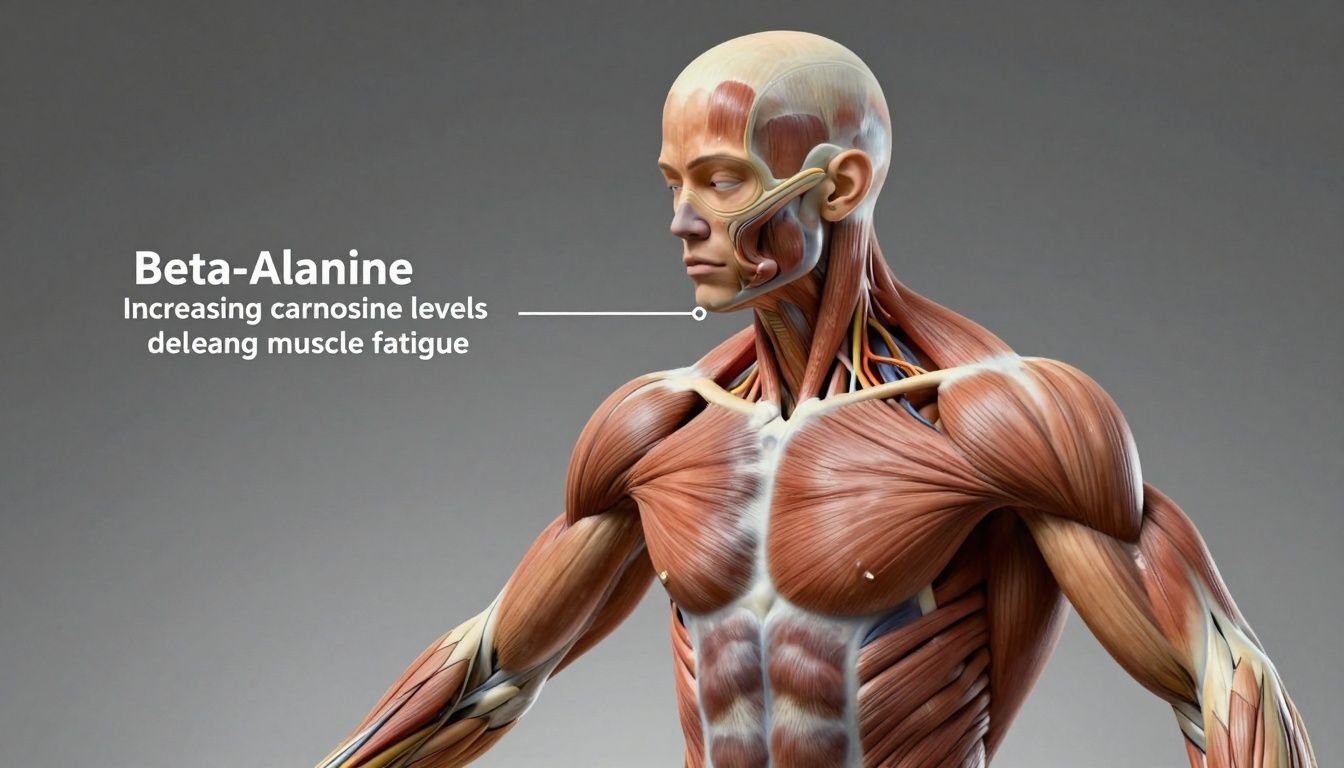
- Beta-Alanine combines with L-histidine in muscle cells to synthesize carnosine.
- Carnosine acts as an intramuscular buffer, neutralizing accumulating hydrogen ions (acid) during high-intensity exercise.
- This buffering delays the drop in pH that triggers muscle fatigue.
- Supplementation increases muscle carnosine stores by up to 80% over several weeks.
Biological Effects
- Raises intramuscular carnosine concentration.
- Delays onset of neuromuscular fatigue during intense exercise.
- May enable higher total training volume and greater aerobic power output.
- No direct stimulation of the central nervous system.
- Not shown to significantly affect muscle size or strength independently of training.
Benefits of Beta-Alanine
Delays Muscle Fatigue and Improves Endurance
Beta-Alanine supplementation increases intramuscular carnosine levels, which enhances the muscle’s ability to buffer hydrogen ions produced during high-intensity exercise. This buffering action helps delay the drop in muscle pH that contributes to fatigue, particularly during efforts where anaerobic glycolysis is a major energy contributor. As a result, athletes may sustain high outputs for longer before performance declines.
Multiple systematic reviews and meta-analyses indicate that Beta-Alanine is most effective for exercise bouts lasting approximately 1–4 minutes, a range where metabolic acidosis is a primary limiting factor. Performance improvements are consistently observed in laboratory tests measuring time to exhaustion, total work completed, and repeated high-intensity efforts. These effects are less pronounced — or absent — in very short, maximal sprint tasks where acid accumulation is not the primary cause of fatigue.
Increases Training Volume
By elevating muscle carnosine concentrations, Beta-Alanine supplementation can enhance overall high-intensity exercise capacity. This allows athletes to tolerate greater training stress, sustain higher workloads, or complete more work during demanding sessions. Improvements are most evident in protocols involving repeated bouts of intense activity or continuous efforts where fatigue accumulates over time.
A well-cited meta-analysis of double-blind, placebo-controlled trials reported a small but statistically significant improvement in exercise performance following chronic Beta-Alanine supplementation, with the strongest effects seen in high-intensity efforts lasting ~60–240 seconds. Across studies, the median performance benefit was approximately 2–3%, which can be meaningful in competitive or high-volume training contexts despite appearing modest in magnitude.
Supports High-Intensity Intervals and Sprinting Performance
Beta-Alanine appears particularly useful for athletes who perform repeated high-intensity intervals or must sustain near-maximal efforts toward the end of a bout, race, or training set. By improving intracellular buffering capacity, Beta-Alanine may reduce fatigue accumulation across successive efforts rather than enhancing peak power in a single sprint.
Sports and training modalities that involve sustained high-intensity outputs — such as track cycling pursuits, rowing time-trials, circuit-based conditioning, or repeated sprint drills — may therefore benefit most. Importantly, Beta-Alanine does not consistently improve single maximal sprint performance, but rather supports the ability to maintain intensity and work capacity when acid buildup becomes performance-limiting.
Provides Minimal Side Effects at Recommended Doses
Beta-Alanine is generally well-tolerated, with a strong safety profile. The most commonly reported side effect is transient skin tingling (paresthesia), typically felt on the face, neck, or hands. This sensation occurs primarily with single doses exceeding ~800 mg and usually resolves within 60–90 minutes. Most participants tolerate standard divided dosing regimens (e.g., 3–6 g/day split across multiple servings) without issue. Evidence from multiple human studies supports that paresthesia is dose-dependent, harmless, and short-lived.
Older Adult Supplementation with Beta‑Alanine in a Nutritional Matrix
Another study in Experimental Gerontology (2013) investigated a structured nutritional supplement fortified with beta‑alanine in older adults (~70.7 years) over 12 weeks. Participants receiving beta‑alanine‑fortified supplements showed significant improvements in physical working capacity at the fatigue threshold (PWCFT) versus the non‑beta‑alanine group, further supporting the idea that supplementation can help delay fatigue and improve exercise capacity in older individuals.
Side Effects & Safety
While Beta-Alanine is generally categorized as a safe supplement with minimal risk, all athletes should be aware of specific side effects, especially if exceeding recommended dosages. Understanding likelihood, severity, and risk factors ensures safe usage.
Tingling (Paresthesia)
The most commonly reported side effect of beta-alanine supplementation is paresthesia, a tingling or itching sensation typically felt on the face, neck, or extremities. This effect is dose-dependent and occurs most often when beta-alanine is consumed in large single bolus doses, rather than spread throughout the day.
Importantly, paresthesia is harmless and temporary, resolving on its own within a short period. Research and position statements consistently note that the sensation can be minimized by dividing the daily dose into smaller servings or using sustained-release formulations, without affecting the supplement’s performance benefits.
Gastrointestinal Distress
At very high doses, some users report mild stomach discomfort, nausea, or cramping. Such effects are rare with standard dosages (typically 3–6 grams/day divided), but risks increase if excessive pre-workout stacking occurs. Always follow dosing instructions and consume with food if needed.
Potential for Contamination or Adulteration
As with other supplements, the main safety risk comes from unregulated manufacturing, where cross-contamination or mislabeling can occur. Always choose supplements with third-party testing and certification (e.g., NSF Certified for Sport, Informed-Sport).
No Serious Organ Toxicity
Long-term clinical research has not documented organ toxicity or serious injury in humans at usual performance doses. Monitoring is not required unless used alongside other ergogenic agents or pre-existing health issues exist.
Interactions
Currently, no clinically meaningful interactions are documented between Beta-Alanine and common medications or supplements. Nonetheless, always disclose supplement use to your healthcare provider to ensure full safety.
Pros & Cons (Table)
Beta-Alanine offers compelling benefits for certain athletes, but its effects are context-dependent, and drawbacks should not be overlooked.
| Pros | Cons |
|---|---|
| Delays fatigue during high-intensity efforts | Tingling (paresthesia) at higher doses |
| Increases training volume and performance | No effect for low-intensity or ultra-endurance events |
| Scientifically validated in well-designed studies | Efficacy highly dependent on training type |
| Generally safe with minimal risk | GI distress if misused |
| Legal and widely available | May cause mild reactions in sensitive individuals |
| Useful for both trained athletes and older adults | Minimal/no effect on strength or muscle size in isolation |
| Not a stimulant—no jittery effects | Potential for supplement contamination if poorly sourced |
How Athletes & Bodybuilders Use Beta-Alanine
Practical Usage Scenarios
- Cutting Cycles: Beta-Alanine can help maintain or even increase workout intensity despite calorie deficits by delaying fatigue.
- Bulking Phases: Enables greater total training volume, translating to improved hypertrophy stimulus in resistance training programs.
- Rehabilitation/Return to Play: Some evidence supports its use in maintaining muscle endurance following periods of detraining or injury recovery.
Timing, Forms, & Implementation
- Beta-Alanine is typically consumed as a stand-alone powder, in capsules, or as part of pre-workout blends.
- Evidence supports a daily dose of 3.2–6.4 grams, taken in divided doses to avoid paresthesia.
- Effects are not acute; benefits require several weeks of consistent supplementation to build up muscle carnosine stores.
- Timing is flexible; consume with or without food based on personal tolerance.
- Laboratory monitoring is not generally required for Beta-Alanine, as toxicity is rare.
Monitoring & Safety Notes
- Monitor for paresthesia: reduce dose per serving if uncomfortable.
- Choose supplements certified for sport to prevent contamination.
- Athletes subject to anti-doping tests should confirm WADA status of each product, as contamination is possible.
- “No relevant internal pages found in sitemap.”
Comparison to Similar Compounds
Comparison Table
| Compound | Primary Use | Mechanism | Effect Size | Risks | Regulatory Status |
|---|---|---|---|---|---|
| Beta-Alanine | Endurance/Fatigue | Carnosine buffer | Moderate-High | Tingling, rare GI | Legal, few restrictions |
| Creatine | Strength/Power | ATP regeneration | High | Water retention | Legal, few restrictions |
| Citrulline Malate | Blood flow/fatigue | NO production, acid buffer | Moderate | GI upset | Legal |
| BCAAs | Recovery | Protein synthesis, fatigue | Low-Moderate | Minimal | Legal |
| Sodium Bicarbonate | Acid buffer | Buffers lactic acid | Moderate | GI distress | Some restrictions |
| Caffeine | Alertness/energy | Stimulant (CNS) | Moderate | Heart/jitter | Legal |
| HMB | Muscle protection | Limits breakdown | Low-Moderate | Rare GI | Legal |
| Taurine | Endurance/hydration | Osmolyte, antioxidant | Low | Rare | Legal |
Analysis
Beta-Alanine stands out as the top legal supplement for buffering acid and directly delaying fatigue in moderate-duration high-intensity exercise, with minimal side effects when used properly.
Legality & Regulatory Status
- US FDA: Allowed as a dietary supplement; must comply with cGMP.
- WADA: Not specifically prohibited (2024), but always check as lists update and contamination can cause positives.
- EMA (Europe): Legal as a food supplement; local laws may apply.
- UK MHRA: Legal as supplement, provided labeling is accurate.
- Australia TGA: Permitted in sports products, within labeling regulations.
- Athlete warning: Always assess batch testing to prevent inadvertent contamination with banned substances.
Where to buy “Beta-Alanine”?
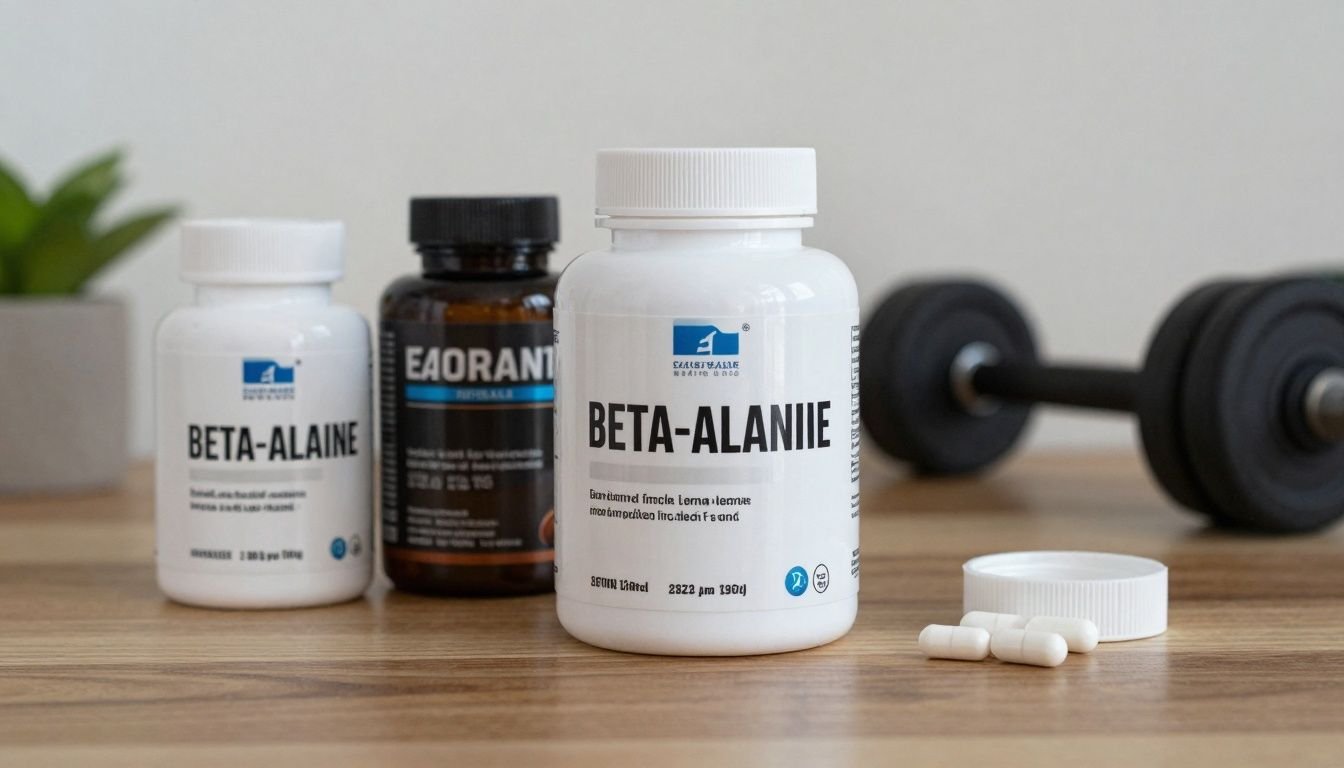
Beta-Alanine is legally sold in most countries at health stores and online, with reputable brands offering certified products. Always look for third-party batch-tested supplements to guarantee purity and compliance.
Alternatives to Beta-Alanine
For those unable or unwilling to use Beta-Alanine, several well-researched alternatives may support endurance or high-intensity performance:
- Creatine Monohydrate: Best-supported for increasing strength and high-power output; works via cellular energy pathways.
- Citrulline Malate: May boost nitric oxide and reduce fatigue; shown to enhance endurance in repeated sprint tasks.
- Sodium Bicarbonate: Effective acid buffer like Beta-Alanine for high-intensity events; GI side effects more common.
- Caffeine: Acute CNS stimulant shown to enhance alertness and endurance for short-duration efforts.
- HMB: May protect against muscle breakdown in prolonged or intense training cycles.
Frequently Asked Questions (FAQ)
- Does Beta-Alanine work immediately?
No, Beta-Alanine must be taken consistently for several weeks to build up muscle carnosine stores. Immediate performance benefits are unlikely with a single dose. - Is Beta-Alanine safe for women and older adults?
Yes, research includes both groups with similar results and minimal side effects at typical dosages. - Can I combine Beta-Alanine with other supplements?
Yes, most combine Beta-Alanine with creatine or pre-workout blends, but always avoid exceeding the recommended daily dose. - How long should I cycle Beta-Alanine?
Most studies run 4–12 weeks continuously, with effects persisting as long as supplementation continues. - Does the tingling mean it’s unsafe or working?
Tingling is a harmless side effect at high single doses and not an indicator of effectiveness. - Will Beta-Alanine help with marathons or long endurance events?
Its primary benefits are for high-intensity events—ultra-endurance athletes see minimal improvement. - How much should I take for best results?
Typical research doses are 3.2–6.4 grams daily, split into multiple doses to minimize paresthesia. - Could I fail a doping test with Beta-Alanine?
Beta-Alanine itself is not banned—but always buy certified supplements to avoid contaminated batches. - Does it build muscle directly?
No, it mainly enables more work per session; muscle gains result indirectly via increased training volume. - Can I take it year-round?
Long-term use is supported by current evidence, but breaks after 12–16 weeks may be helpful for some. - Can I get enough from food?
Only trace amounts come from food; effective doses for performance require supplementation. - When should I take Beta-Alanine?
Timing is flexible—split the total daily dose into two to four servings. - Is it safe for teens?
While research mostly involves adults, occasional supervised use in mature teen athletes appears reasonable, though always consult a healthcare provider. - How do I know if it’s working?
Most notice reduced fatigue and slightly increased training capacity after 2–4 weeks of consistent dosing. - Is it worth the money?
For most athletes in high-intensity sports or training, Beta-Alanine is a cost-effective, proven supplement.
Conclusion
Beta-Alanine is a practical, affordable supplement with one of the best risk-benefit profiles among ergogenic aids for athletes targeting high-intensity performance. Its primary users are athletes participating in sports or training blocks that rely heavily on repeated, short-burst or cardio-intensive efforts; ultra-endurance athletes may see less impact.
The main risk is transient skin tingling, not serious adverse effects—though product purity should always be prioritized. Best results are seen when Beta-Alanine is combined with structured training and other proven supplements, alongside careful attention to labeling and third-party testing.
Athletes considering Beta-Alanine should evaluate their performance needs, weigh benefits versus expectations, and use it as part of a comprehensive, evidence-based training plan.
Athlete’s Final Checklist
- Monitor skin tingling; reduce per-dose size if uncomfortable.
- Use divided doses for tolerability and optimal carnosine loading.
- Select supplements with third-party certification to minimize contamination risk.
- Watch for any signs of GI upset or allergic responses.
- Check WADA and sport-specific anti-doping updates before each season.
- Record training performance before and after use to assess benefit.
- Follow proper storage and labeling to prevent mix-ups.
- Consult a sports nutritionist or physician if combining with other supplements or medications.
Studies & References
Human research on beta-alanine supplementation is extensive and primarily focuses on its ability to increase intramuscular carnosine concentrations and improve buffering capacity during high-intensity exercise. The strongest evidence comes from systematic reviews, meta-analyses, and consensus position stands synthesizing results from multiple randomized, placebo-controlled trials.
Key Evidence Sources
- International Society of Sports Nutrition (ISSN) Position Stand: Beta-Alanine
This position stand reviews the collective human research on beta-alanine supplementation. It concludes that chronic beta-alanine intake reliably increases muscle carnosine concentrations and improves performance in high-intensity exercise lasting approximately 60–240 seconds. Paresthesia is identified as the primary side effect, with no evidence of serious adverse outcomes at recommended doses.
PubMed ID: 26175657
https://pubmed.ncbi.nlm.nih.gov/26175657/ - Hobson RM et al., 2012 – Effects of Beta-Alanine Supplementation on Exercise Performance: A Meta-Analysis
This meta-analysis evaluated data from multiple double-blind, placebo-controlled trials and reported a small but statistically significant improvement in exercise performance following beta-alanine supplementation. Benefits were most evident in high-intensity exercise tasks where metabolic acidosis is a limiting factor.
PubMed ID: 22270875
https://pubmed.ncbi.nlm.nih.gov/22270875/ - Saunders B et al., 2017 – Twenty-Four Weeks of Beta-Alanine Supplementation on Muscle Carnosine Content and Exercise Performance
This long-term human study examined the effects of extended beta-alanine supplementation on muscle carnosine accumulation and exercise performance. Results confirmed substantial increases in muscle carnosine content over time, supporting the safety and efficacy of prolonged supplementation, though performance outcomes varied depending on exercise modality.
PubMed ID: 28157726
https://pubmed.ncbi.nlm.nih.gov/28157726/